



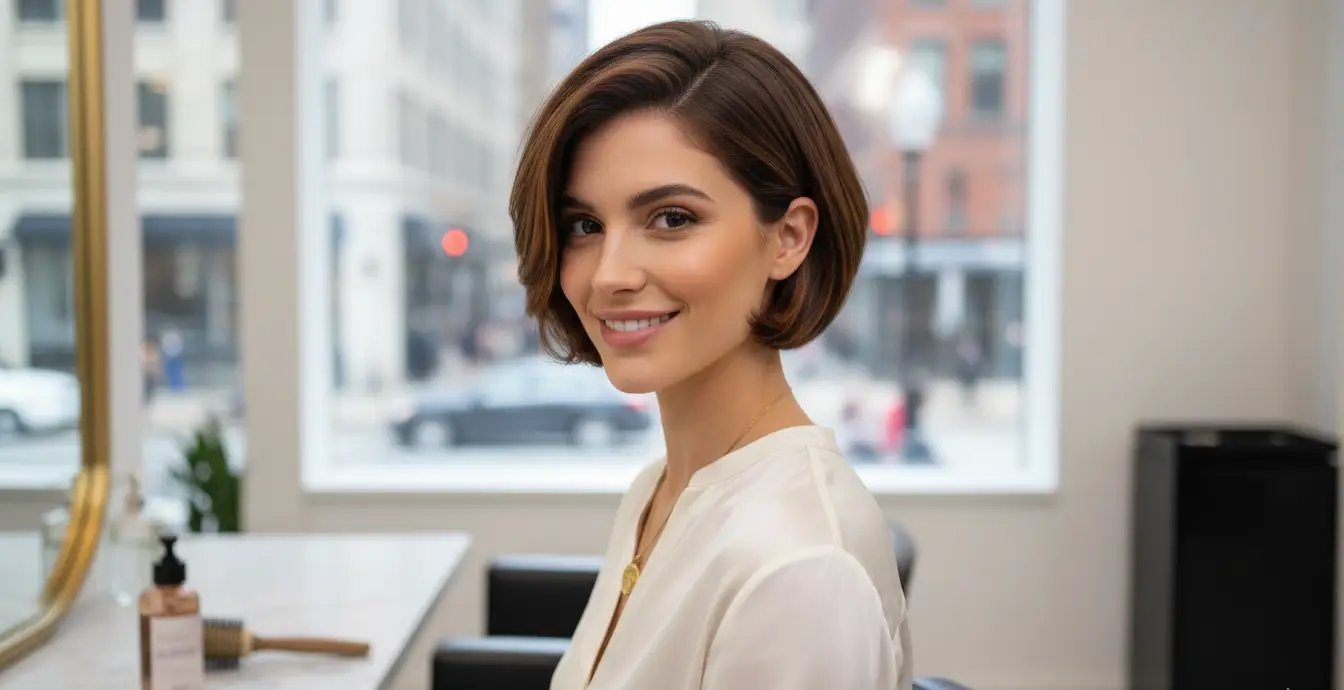
What Is Shingled Hair?
Shingled hair is one of the most iconic cuts in hair history. So, what exactly is it? Simply put, a shingle cut is a short bob that tapers to a neat “V” shape at the nape of the neck. The hair gradually gets longer as it moves toward the front of the face.
The name “shingled” comes from the technique hairdressers use to create it. Just like roof shingles overlap in neat, even layers, hairdressers cut the hair into soft, stacked layers that slope downward. The result is a clean, close-cropped back with a bold, face-framing front.
Furthermore, there are actually two popular meanings of “shingling” in the hair world today. First, there is the classic shingle bob a structured, tapered cut. Then, there is the shingling method a curl-defining technique that people with natural, coily, or wavy hair swear by. Both are worth knowing, and both are trending right now.
A Brief History of the Shingle Cut
The shingle haircut has a rich and fascinating history. It first became popular in the early 1920s. At that time, women were breaking social norms left and right. Cutting your hair short was, therefore, one of the boldest statements a woman could make.
Before the 1920s, women almost always wore their hair long. Then, daring flappers and modern women began embracing shorter styles. First came the classic bob. However, by around 1923, stylists wanted something even sleeker and more daring. As a result, hairdressers created the shingle cut.
The shingle cut also called the “boyish bob” tapered to a point at the nape of the neck. It often featured soft waves or short curls on the sides. In fact, hair historians widely credit the famous hairdresser Antoine de Paris with introducing the shingle cut to fashionable circles in the 1920s. His clients included icons like Coco Chanel. You can explore one of the most iconic early examples the Pringle Shingle of 1925 to see just how bold and ahead of its time this cut really was.
Moreover, the cut quickly became a status symbol. Unlike the simple bob, the shingle haircut was much harder to achieve. It required regular visits to a professional salon. Therefore, it became a sign of sophistication and independence. Society saw women who wore it as bold and modern.
How the Shingle Cut Works: The Technique
The shingling technique is truly an art form. In fact, early hairdressing books described it as a skill that took years to master. Here is how it works:
Step 1 — Section the hair. The stylist first separates the hair from crown to nape. They hold the sides in place with combs.
Step 2 — Taper the back. Then, they cut the hair in a series of gentle, overlapping tapers at the back. The key is to make these tapers smooth and even. The back should look like a soft slope, not a staircase.
Step 3 — Shape the neckline. Next, the stylist finishes the neckline. This is the most defining part of the shingle cut. The hair tapers to a neat “V” or point at the nape, leaving the neck beautifully exposed.
Step 4 — Style the sides. Finally, the stylist styles the sides to softly frame the face. You can sweep them back, pin them behind the ear, or shape them into soft waves.
Additionally, stylists never thin the outside layer of hair. This keeps the top layer smooth and polished.
The Shingling Method for Curly and Natural Hair
Beyond the classic haircut, “shingling” also refers to a popular styling method for curly and natural hair. So, how does this technique work?
First, you wash and condition your hair. Then, while it is still very wet, you section it into small parts. Next, you apply a curl cream or leave-in conditioner to each section. After that comes the shingling step: you take each individual curl between your index finger and thumb. Starting at the roots, you smooth the curl downward to the end.
Natural hair enthusiasts love this technique for several reasons. First of all, it defines each curl exactly where it naturally falls. Therefore, curls are less likely to tangle around each other. Additionally, smoothing each curl removes excess product. As a result, the hair dries faster and looks more voluminous. Moreover, the finished look is incredibly defined and frizz-free.
However, it does take time. For people with long, dense hair, the shingling method can take about an hour. But most people who try it say it is completely worth the effort.
Why Shingled Hair Is Trending Again in 2026
Here is exciting news: the shingle cut is making a major comeback right now. And it fits perfectly into the biggest hair trends of 2026.
According to current hair experts, 2026 is all about bold structure with effortless style. Short, precise cuts are dominating salons everywhere. The blunt bob and the bixie cut are both hugely popular. Furthermore, sleek, polished silhouettes are in high demand. The shingle bob fits right into this movement.
Marlon Hawkins, Artistic Director at Brooks and Brooks Salon, describes the shingle bob as “very playful, androgynous and versatile.” He adds that it “steps away from the classic bob, sitting above jaw length and exposing facial features.” Therefore, it is perfect for anyone who wants to make a bold statement without going fully pixie.
Moreover, the shingle bob works with the current trend toward vintage-inspired cuts. The 1920s aesthetic is influencing fashion and beauty in a big way right now. As a result, the shingle cut feels both nostalgic and completely fresh.
Additionally, the cut pairs beautifully with 2026’s biggest colour trends, such as colour melting and creamy neutral tones. So, if you are thinking of a hair refresh this year, the shingle bob is one of the smartest choices you can make. In Chennai, Maynee Cosmetology Clinic, Ambattur has been at the forefront of this revival, offering precision shingle bobs tailored to each client’s face shape and hair texture making it a top destination for anyone ready to embrace this bold cut.
Who Does the Shingle Cut Suit?
The great news is that the shingle bob is surprisingly versatile. It suits a wide range of face shapes and hair types. However, it does look especially stunning on certain features.
It works best for:
- Oval and heart-shaped faces — The cut beautifully frames these face shapes and draws attention to the cheekbones and eyes.
- Square and angular jawlines — The tapered neckline softens a strong jaw while still keeping things bold and structured.
- Fine to medium hair — The stacked layers add volume and shape, so fine hair looks fuller and thicker.
However, if you have very thick or coarse hair, the cut can still work. Your stylist simply needs to thin the interior layers carefully to avoid too much bulk.
Furthermore, you can wear the shingle cut with or without a fringe. A blunt or wispy fringe adds extra drama and personality. On the other hand, going fringe-free keeps the look cleaner and more understated. It is also worth noting that the shingle bob works brilliantly as a transitional style for those growing out a pixie cut, helping you skip the dreaded awkward in-between phase with a flattering, structured shape.
How to Style a Shingle Bob at Home
Styling a shingle bob is easier than you might think. First, you need the right products. Then, a few simple techniques will keep your cut looking salon-fresh every day.
What you will need:
- A lightweight styling cream or pomade
- A fine-tooth comb
- A small round brush
- A blow dryer
- A light-hold hairspray
Step 1: Start with damp hair. Apply a small amount of styling cream evenly through the hair. This adds control and shine without weighing the hair down.
Step 2: Next, use your round brush and blow dryer to smooth the hair close to the head at the back. The goal is a sleek, tapered shape at the nape.
Step 3: Then, style the sides and top. You can brush the hair back for a sleek look. Alternatively, you can use a comb to create a soft wave or a neat finger wave for a vintage vibe.
Step 4: Finally, finish with a light mist of hairspray. This locks in the shape and adds a polished sheen.
Pro tip: Ask your stylist for a trim every four to six weeks. The shingle cut loses its shape quickly as the hair grows out. Therefore, regular maintenance is key to keeping it looking sharp. If you love the vintage angle, this detailed guide to the vintage shingle bob styling techniques is well worth a read before your next salon visit.
The Shingling Method: A Step-by-Step Guide for Curly Hair
If you want to try the shingling method on your natural curls, here is a simple guide to get started.
What you will need:
- A moisturising shampoo and deep conditioner
- A leave-in conditioner
- A curl cream or styling gel
- A spray bottle with water
- A castor oil or coconut oil (optional, as a sealant)
Step 1 — Wash and condition. First, wash your hair and apply a deep conditioner. Rinse thoroughly.
Step 2 — Section the hair. Then, divide your hair into two halves. After that, work in small sections.
Step 3 — Apply products. Spritz each section with water until it is dripping but not soaking. Next, apply your leave-in conditioner. Then, follow with a curl cream.
Step 4 — Shingle each curl. Now comes the key step. Take each individual curl between your index finger and thumb. Starting at the root, gently smooth it downward to the tip. Repeat this until the entire section is done.
Step 5 — Seal and dry. After shingling, add a small amount of castor oil if you want extra moisture. Then, allow your hair to air-dry or use a diffuser on a low heat setting.
Step 6 — Do not touch! Finally, resist the urge to touch your hair while it dries. This will prevent frizz and keep your curls perfectly defined.
Common Mistakes to Avoid
Even though shingling is a beautiful technique, there are some common mistakes people make. However, these are easy to fix once you know what to watch for.
Mistake 1 — Using too much product. Heavy product weighs curls down and leaves them crunchy. Instead, use a lightweight cream and apply it sparingly.
Mistake 2 — Working with sections that are too large. Big sections make it harder to shingle each curl properly. Therefore, always work in small, manageable portions.
Mistake 3 — Skipping the water spray. Your hair needs to be dripping wet for the shingling method to work well. So, always make sure each section is thoroughly soaked before you begin.
Mistake 4 — Cutting your shingle bob too infrequently. This cut loses its shape fast. As a result, many stylists recommend getting a trim every four to six weeks.
Mistake 5 — Going to a stylist unfamiliar with the cut. Not every stylist has experience with the shingle technique. Therefore, always ask to see examples of their work before you commit.
Shingled Hair vs. the Regular Bob: What Is the Difference?
Many people wonder how the shingle bob is different from a regular bob. The answer is simple. A standard bob is usually cut to the same length all the way around. It falls at chin level or just below.
On the other hand, the shingle bob is much shorter at the back. It tapers to a close-cropped “V” at the nape of the neck. Additionally, the sides are longer and gradually sweep forward to frame the face. Furthermore, the shingle cut always exposes the neckline, while a regular bob usually covers it.
Therefore, the shingle bob has a much stronger silhouette. It is bolder, more structured, and more daring than a typical bob. However, it is also more high-maintenance. So, it is best for people who enjoy regular salon visits and love a polished, defined look.
Final Thoughts: Is the Shingle Cut Right for You?
The shingle haircut is truly one of the most timeless and versatile cuts in history. Stylists first introduced the shingle haircut in the 1920s, and it has remained relevant for over a century. And right now, in 2026, it is having one of its most exciting revivals yet.
Whether you are drawn to the structured elegance of the shingle bob or the curl-defining magic of the shingling method, this style has something to offer everyone. Moreover, it pairs beautifully with today’s biggest beauty trends from precision cuts and colour melting to natural texture and sleek finishes.
So, if you are ready to make a bold, confident change, the shingle cut might just be your perfect next move. Talk to your stylist, bring some reference photos, and get ready to turn heads. If you are based in Chennai, the expert stylists at Maynee Cosmetology Clinic, Ambattur can guide you through choosing the right variation of the shingle bob for your face shape, hair type, and lifestyle and deliver a result that is polished, precise, and entirely you. After all, a century of style does not lie.
Frequently Asked Questions About Shingled Hair (FAQ)
A shingled haircut is a short bob that tapers into a neat “V” shape at the nape of the neck. Hairdressers cut overlapping layers at the back, much like roof shingles. The sides gradually lengthen toward the face, creating a bold, structured silhouette that exposes the neckline beautifully.
No, they are quite different. A regular bob usually falls at the same length all around, typically at chin level. The shingle bob, however, is much shorter at the back, tapering to a close point at the nape. It also has stacked layers and a stronger, more defined shape than a standard bob.
The shingle bob works wonderfully on oval, heart-shaped, and square face shapes. Oval faces carry the cut naturally, while heart-shaped faces benefit from the way it draws the eye upward. Square jawlines look softer and more balanced thanks to the tapered neckline. That said, a skilled stylist can tailor the cut to almost any face shape.
You need a trim every four to six weeks to keep the shingle bob looking its best. Because the cut relies on a precise taper at the nape, it loses its shape relatively quickly as the hair grows. Regular maintenance is, therefore, essential to keeping the silhouette clean and sharp.
Yes, you can. However, your stylist will need to thin the interior layers carefully to manage volume and prevent the cut from looking too bulky. For curly hair, the shingle bob can look stunning especially with defined, natural texture at the sides. Always consult a stylist who has experience working with your hair type before committing to the cut.
These are two completely different things. The shingle haircut is a structured, tapered bob cut. The shingling method, on the other hand, is a curl-defining styling technique. It involves smoothing each individual curl downward from root to tip while the hair is very wet, using a leave-in conditioner and curl cream. The result is beautifully defined, frizz-free curls.
To style a shingle bob at home, you need a lightweight styling cream or pomade, a fine-tooth comb, a small round brush, a blow dryer, and a light-hold hairspray. Apply a small amount of styling cream to damp hair, use the round brush and blow dryer to smooth the back close to the head, and finish with a light mist of hairspray for a polished, salon-fresh result.
Compared to a regular bob. yes, the shingle bob is more high-maintenance. It requires trims every four to six weeks to preserve the taper and shape. Daily styling also takes a little more effort to keep the back sleek and the sides smooth. However, most people who have it say the striking, polished look is completely worth the extra upkeep.
The shingle haircut originated in the early 1920s. Hairdressers first created it as a bolder, sleeker evolution of the classic bob. Hair historians widely credit Antoine de Paris with popularising the cut among fashionable women of the era. Flappers and style icons including Coco Chanel eagerly adopted it as a symbol of independence and modernity.