

Cosmelan Peel —
Defeat Melasma,
Reveal Even Skin. Visibly.
Chennai's certified skin clinic for Cosmelan Peel — the world's leading medical-grade depigmentation treatment for melasma, dark spots, hormonal pigmentation, post-acne marks and uneven skin tone. One in-clinic session. Months of visible transformation. Safe for all Indian skin tones.

The Gold Standard for
Stubborn Pigmentation.
Cosmelan Peel is the world's leading Mesoestetic-certified, medical-grade depigmentation treatment — designed to completely eliminate all types of stubborn hyperpigmentation, melasma, hormonal dark patches and post-acne marks through a dual-phase protocol that works at the cellular level.
Cosmelan Peel by Mesoestetic is not a standard chemical peel. While conventional chemical peels exfoliate the skin surface — removing dead cells and stimulating renewal — Cosmelan goes fundamentally deeper. Its unique multi-ingredient formulation (Cosmelan 1 mask, applied in-clinic, and Cosmelan 2 cream, continued at home) works at the cellular level by inhibiting tyrosinase — the enzyme central to the melanogenesis pathway, the biological process through which melanin is produced. By suppressing tyrosinase activity, Cosmelan simultaneously clears existing melanin deposits from the epidermis and dermis and actively prevents new melanin overproduction that causes pigmentation to recur. This dual corrective-and-regulating action is what distinguishes Cosmelan from every conventional peel or topical cream available — making it one of the most clinically significant depigmentation breakthroughs in modern dermatology.
For patients in Chennai — where the UV index peaks at 11–13 year-round, humidity drives melanocyte stimulation and hormonal pigmentation patterns are prevalent — Cosmelan Peel offers something that surface-level peels and topical regimens cannot: a dermatologist-administered, clinically validated protocol that targets the biological root cause of pigmentation rather than its surface appearance alone. At Maynee, every Cosmelan treatment is assessed and administered by a certified dermatologist who Fitzpatrick-types your skin, determines the precise application time for the Cosmelan 1 mask and designs a fully personalised 4–7 month Cosmelan 2 maintenance programme to sustain and complete your results — ensuring the highest possible outcome for your specific pigmentation pattern and skin type.
How Cosmelan Peel Works — The Science
Active Ingredients in Cosmelan Peel
Kojic Acid Azelaic Acid Phytic Acid Retinoic Acid Ascorbic Acid (Vitamin C) Salicylic Acid Cosmesome Complex (Mesoestetic) Tyrosinase Inhibitors
Six Ways Cosmelan Peel
Transforms Your Skin
Cosmelan Peel addresses the full spectrum of pigmentation concerns — from stubborn melasma and hormonal patches to post-acne dark marks, sun damage, uneven tone and dull skin — through one clinically proven protocol.
Eliminates Stubborn Melasma & Hormonal Pigmentation
Melasma — the symmetrical brown, grey or dark patches across the cheeks, forehead, upper lip and chin — is one of the most challenging and persistent pigmentation conditions in dermatology, driven by a complex interaction of UV exposure, hormonal fluctuations (pregnancy, oral contraceptives, thyroid conditions) and genetic predisposition. Conventional treatments including topical creams and standard chemical peels consistently fail to produce sustained results because they address only the surface pigment deposits — leaving the underlying melanocyte overactivity untreated. Cosmelan Peel is fundamentally different: its tyrosinase-inhibiting formulation targets the biological origin of melanin overproduction, simultaneously clearing existing melasma deposits through accelerated cell turnover and suppressing new melanin synthesis through continuous tyrosinase regulation during the Cosmelan 2 maintenance phase. Clinical studies across multiple dermatology centres worldwide confirm Cosmelan Peel produces significantly greater melasma area and severity index (MASI) reductions than topical therapy or standard chemical peels alone — with studies reporting clearance rates of 85–95% for epidermal melasma in compliant patients. For Chennai patients with hormonally-aggravated melasma worsened by year-round UV exposure, Cosmelan offers the most clinically substantiated, dermatologist-supervised depigmentation outcome available from a non-laser protocol.
Clears Post-Acne Dark Marks & Hyperpigmentation
Post-inflammatory hyperpigmentation (PIH) — the dark marks left on the skin after acne lesions heal — is one of the most common and distressing skin concerns for Indian skin tones. In Fitzpatrick III–V skin types, the skin's inflammatory response to acne, eczema or any skin trauma triggers an exaggerated melanocyte response, depositing excess melanin in the healing skin and leaving persistent dark marks that can last months or years without clinical intervention. Topical brightening creams provide only superficial improvement and the hyperpigmentation reoccurs with each new breakout. Cosmelan Peel addresses PIH at both levels simultaneously — the intensive in-clinic Cosmelan 1 mask clears the existing melanin-laden epidermal cells through accelerated desquamation and exfoliation, while the Cosmelan 2 maintenance phase suppresses tyrosinase activity — directly addressing the overactive melanocyte response that perpetuates PIH. This combination of surface clearance and cellular regulation progressively fades even long-standing post-acne marks across the maintenance phase, with visible improvement beginning within 2–4 weeks of the in-clinic session.
Reverses Sun Damage & Age Spots
Chronic UV exposure — particularly in Chennai's latitude 13°N environment with year-round UV indices regularly reaching 11–13 — causes cumulative, progressive melanocyte stimulation that produces multiple clinical presentations: sun-induced lentigines (flat brown spots), solar hyperpigmentation, ephelides (freckles that darken with UV exposure) and generalised mottled skin tone that makes skin appear aged beyond its chronological years. These UV-induced changes are driven by the same tyrosinase-melanin pathway that Cosmelan targets directly. The in-clinic Cosmelan 1 application clears the surface layers of melanin-containing cells that create visible dark spots, while the Cosmelan 2 maintenance cream suppresses ongoing melanocyte stimulation — preventing new UV-triggered pigment spots from forming throughout the maintenance phase. For Chennai patients with significant cumulative sun damage, Cosmelan Peel combined with strict daily SPF 50+ compliance provides the most comprehensive topical reversal of UV-induced pigmentation available, addressing both existing spots and the cellular mechanism producing new ones.
Evens Skin Tone & Restores Luminosity
An uneven, blotchy or mottled skin tone — patches of darker and lighter skin scattered across the face, neck or body — is one of the most visible and challenging cosmetic concerns for Indian and South Asian patients. Whether driven by hormonal pigmentation, UV exposure, post-inflammatory response or a combination of all three, the result is a skin surface that lacks uniformity, appears dull under any lighting and is extremely difficult to conceal or correct with makeup alone. Cosmelan Peel's multi-mechanism approach addresses uneven tone comprehensively: the intensive exfoliation of the Cosmelan 1 phase sheds the outer layers of pigmented cells rapidly across the entire treated area — producing a uniform, accelerated renewal of the skin surface that levels out the contrast between lighter and darker zones. The sustained tyrosinase regulation of the Cosmelan 2 phase then prevents new uneven patches from forming during recovery, allowing the skin to renew to a more consistently even tone across the full maintenance period. The cumulative result — an even, luminous, unified skin tone — is one of the most consistently praised outcomes by Cosmelan patients and one of the clearest visible metrics of treatment success at 4–6 months.
Improves Skin Texture, Pores & Fine Lines
While Cosmelan Peel is primarily a depigmentation treatment, its multi-active ingredient formulation delivers simultaneous secondary benefits on skin texture and quality that clients consistently describe as unexpected positive outcomes. The combination of retinoic acid (vitamin A derivative), azelaic acid and ascorbic acid in the formulation collectively stimulates cellular turnover, encourages collagen synthesis in the dermis and refines the appearance of enlarged pores and surface texture irregularities — producing an overall improvement in skin smoothness, firmness and quality alongside the primary pigmentation correction. Fine lines on the treated area are visibly softened as the combination of exfoliation and collagen stimulation improves the skin's structural matrix. For Chennai patients with both significant pigmentation and the early signs of photoaging — a common combination given the UV environment — Cosmelan Peel offers a single clinical protocol that delivers meaningful improvements in both pigmentation and anti-ageing skin quality simultaneously.
Prevents Pigmentation Recurrence — Long-Term Control
The defining difference between Cosmelan Peel and every conventional chemical peel or topical brightening treatment is its sustained, long-term pigmentation control mechanism. Standard peels exfoliate existing pigmented cells — producing temporary brightening — but leave the melanocyte overactivity that generated the pigmentation completely untreated. When UV exposure, hormonal stimulation or skin trauma recommences, the pigmentation returns rapidly — often more aggressively than before, as the melanocytes are sensitised. Cosmelan Peel's Cosmelan 2 maintenance phase provides continuous tyrosinase inhibition for 4–7 months following the in-clinic session — directly suppressing the melanocyte overactivity mechanism during the critical post-treatment window when pigmentation is most likely to reoccur. This sustained cellular regulation — particularly during the 4–7 months when tyrosinase is continuously inhibited — dramatically extends the period of pigmentation remission compared to any other topical treatment. Patients who complete the full maintenance protocol and maintain strict daily SPF 50+ use typically enjoy substantially longer-lasting results than any alternative topical or chemical peel approach.
Your Cosmelan Peel —
Step by Step
At Maynee, every Cosmelan Peel treatment follows the Mesoestetic-certified clinical protocol — from dermatologist skin assessment and personalised planning through in-clinic mask application, at-home maintenance programme and follow-up progress review.
Dermatologist Skin Assessment & Treatment Planning
Your Cosmelan Peel journey begins with a comprehensive skin assessment by a certified dermatologist. This is not a routine consultation — it is a thorough clinical evaluation that determines whether Cosmelan is the most appropriate treatment for your specific pigmentation type and skin condition, and precisely calibrates the in-clinic application time for your skin. The dermatologist evaluates your Fitzpatrick skin type (I–VI), pigmentation pattern and distribution (epidermal, dermal or mixed melasma; PIH pattern; sun-induced hyperpigmentation), severity and chronicity of pigmentation, skin barrier integrity and hydration status, any existing sensitivities, active skin conditions or relevant medications, and your complete hormonal and medical history. Standardised clinical baseline photographs are taken in controlled lighting for objective progress tracking throughout the protocol. Based on this assessment, the dermatologist determines the personalised Cosmelan 1 mask application time — typically shorter for reactive or sensitive skin, longer for more resilient skin types with deeper pigmentation — and designs the full Cosmelan 2 maintenance programme, including application frequency and tapering schedule for 4–7 months. A pre-peel skin preparation protocol (typically 2–4 weeks of prescribed topical priming) may be recommended before the in-clinic session to optimise results and minimise inflammatory response.
Pre-Application Skin Preparation
The treatment area is thoroughly prepared before the Cosmelan 1 mask is applied. The skin is cleansed with a pH-balanced, gentle cleanser to remove all makeup, sunscreen, surface lipids and debris. A skin degreaser is applied to ensure the skin surface is completely free of oil and residual film — creating an optimal, uniform absorption environment for the Cosmelan 1 formulation across the entire treatment area. This preparation step is clinically critical: uneven surface oil distribution is one of the most common causes of patchy peel absorption and uneven results. The dermatologist re-examines the skin in its fully cleansed state, identifying any areas requiring modified application — including the delicate periocular, perioral and alar zones — and applies protective barrier measures around these areas before beginning mask application. Any active lesions, broken skin or zones of heightened sensitivity are noted and managed appropriately before proceeding.
Cosmelan 1 Mask Application — In-Clinic
The Cosmelan 1 professional-grade mask is applied evenly across the treatment area in a generous, uniform layer by the dermatologist — using a clinical brush or spatula to ensure consistent coverage across all zones of the face and any additional areas being treated (neck, hands, or décolletage). The mask is applied in a specific layering technique that ensures complete coverage of pigmented zones with appropriate concentration distribution. Once the application is complete and inspected for evenness, the mask is allowed to begin its initial action in clinic while the dermatologist provides detailed instructions for the at-home wear period. Patients leave the clinic with the mask in place — this is normal and expected. The mask is worn for the prescribed 8–12 hours (determined individually based on your skin assessment), after which it is removed at home using the prescribed removal protocol. The thick, cream-based consistency of the Cosmelan 1 mask means it will be visible — patients are advised to plan their day accordingly and avoid sun exposure while the mask is in place. A mild tingling or tightening sensation during the wear period is normal and expected.
At-Home Mask Removal & Immediate Aftercare
At the prescribed time (8–12 hours after the clinic application), you remove the Cosmelan 1 mask at home using the exact protocol provided by your dermatologist. The removal process requires gentle, circular motions using a mild, prescribed cleanser with cool or lukewarm water — thorough removal of all mask residue without rubbing or pressure on the treated skin. After complete removal, the prescribed post-application routine is followed immediately: a soothing barrier-repair serum or the designated Melan Recovery cream is applied to calm the skin's initial response, followed by a gentle non-comedogenic moisturiser to support the compromised skin barrier during the early recovery phase. As a final step, SPF 50+ broad-spectrum sunscreen is applied — and maintained every 2 hours throughout all daylight hours from this point forward. In the days following mask removal, the skin will progressively redden, tighten and begin to peel — this is the expected, normal recovery response. The Cosmelan 2 cream is introduced on the schedule prescribed by your dermatologist — typically beginning 3–5 days after mask removal once the initial acute redness resolves.
Cosmelan 2 Maintenance Programme — At Home
The Cosmelan 2 at-home maintenance phase is the cornerstone of the Cosmelan treatment's long-term results — and the principal reason its outcomes are clinically superior to all standard chemical peels. Starting once the acute recovery phase settles (typically days 3–5), Cosmelan 2 cream is applied daily as prescribed — usually once daily for the first month, with frequency tapered according to your dermatologist's schedule across the 4–7 month maintenance period. Cosmelan 2 maintains continuous tyrosinase inhibition at a daily-use concentration — the sustained suppression of melanin overproduction that prevents pigmentation from recurring while the skin continues its progressive renewal cycle. Your dermatologist prescribes the specific application frequency, timing and tapering schedule based on your skin's ongoing response — adjusting at follow-up appointments. During the maintenance phase, the complete prescribed skincare protocol must be followed: Cosmelan 2, prescribed gentle cleanser, prescribed moisturiser and SPF 50+ every 2 hours throughout daylight hours — every single day. No exfoliants, retinoids, AHAs or BHAs until explicitly cleared by your dermatologist.
Follow-Up Review & Progress Assessment
A clinical follow-up review is scheduled at 4–6 weeks post-treatment — the point at which the skin has fully recovered from the in-clinic session and the Cosmelan 2 maintenance phase results are beginning to become measurably visible. At this appointment, the dermatologist compares your current skin state to the baseline clinical photographs taken at the start of treatment, objectively assessing pigmentation reduction, skin tone uniformity, barrier recovery and overall treatment response. Based on this assessment, the Cosmelan 2 application frequency and any additional prescription skincare components are adjusted for the remaining maintenance phase. For clients with deeper or more treatment-resistant melasma or hyperpigmentation, the dermatologist may recommend a second in-clinic application session at this stage to further accelerate results. Ongoing progress reviews are recommended at months 3 and 6 to maintain clinical oversight across the full maintenance period and optimise outcomes.
Before & After Your Cosmelan Peel — Essential Instructions
Before your session: Stop all retinoids (tretinoin, retinol), AHA products (glycolic, lactic, mandelic), BHA products (salicylic acid) and all physical exfoliants 5–7 days before. No waxing, threading or dermaplaning 48 hours prior. Avoid direct sun exposure for 2 full weeks before — UV-stressed skin produces an exaggerated inflammatory response to Cosmelan. Arrive without any makeup, sunscreen or skincare product on the treatment area. Inform your dermatologist of all medications (particularly hormonal contraceptives, antibiotics, photosensitisers or isotretinoin), supplements and any skin changes since your last visit. Do not proceed if there is an active herpes outbreak, open wound, active eczema or rosacea flare.
Immediately after mask removal — first 72 hours: SPF 50+ broad-spectrum sunscreen every 2 hours is non-negotiable and is the single most critical factor in your results — UV exposure on post-Cosmelan skin is the primary driver of adverse pigmentation outcomes. Avoid all direct sun exposure. No gym, sauna, steam or heavy sweating for 72 hours. No makeup for at least 48 hours. Use ONLY prescribed cleanser, barrier cream and SPF. Do not apply Cosmelan 2 until directed by your dermatologist (typically days 3–5).
During recovery and peeling phase (Day 2–14): Peeling, flaking and skin shedding during this phase are normal — this is the visible evidence of melanin-containing cells being shed. Never pick, scratch or mechanically remove peeling skin — this is the most common cause of PIH and scarring after Cosmelan treatment. Keep skin thoroughly moisturised. Avoid all active ingredients. Adhere strictly to the Cosmelan 2 schedule prescribed — never increase application frequency beyond what your dermatologist prescribed, as over-application can cause irritant dermatitis.
The Benefits of Cosmelan Peel
at Maynee
A dermatologist-administered Cosmelan Peel at Maynee delivers clinically proven, root-cause depigmentation — addressing melasma, dark spots, hyperpigmentation and uneven tone with lasting results.
85–95% Melasma Clearance Clinically
Clinical studies across multiple dermatology centres confirm Cosmelan Peel produces melasma clearance rates of 85–95% in compliant patients with epidermal melasma — making it the most clinically validated non-laser depigmentation protocol globally. Results are substantially superior to topical therapy alone and any standard chemical peel.
Safe for All Indian Skin Tones
Unlike lasers and medium-to-deep chemical peels that carry significant PIH risk for Fitzpatrick III–V Indian skin, Cosmelan works purely through tyrosinase inhibition and controlled exfoliation — no heat, no energy. With dermatologist calibration of application time and strict SPF compliance, it is one of the safest high-efficacy depigmentation options for darker skin tones.
Treats the Root Cause — Not Just the Surface
The defining clinical advantage of Cosmelan over all conventional chemical peels is its dual mechanism: surface clearance of existing pigment deposits AND sustained tyrosinase inhibition to prevent new melanin overproduction. By addressing the cellular origin of pigmentation — not just its surface appearance — Cosmelan delivers results that are longer-lasting and more durable than any topical brightening approach.
One In-Clinic Session
Unlike multi-session peel courses requiring repeated clinic visits every 2–4 weeks for months, the Cosmelan protocol requires only one in-clinic application session. The Cosmelan 2 at-home maintenance phase continues the work from your own home — making it practical and manageable for working professionals in Chennai without repeated clinic attendance throughout the course.
Visible Results in 2–4 Weeks
Initial skin brightening, reduced surface pigmentation and improved skin tone uniformity are typically visible within 2–4 weeks of the in-clinic session — once the peeling recovery phase is complete and the skin has renewed. Progressive fading of melasma and dark spots continues across the 4–7 month Cosmelan 2 maintenance phase, with maximum results at 4–6 months from the in-clinic session.
No Heat, No Laser, No Injectables
Cosmelan Peel achieves its outstanding depigmentation results entirely through topical chemistry — no laser energy, no heat devices, no needles, no radiofrequency. This makes it suitable for patients who are not candidates for laser treatments (particularly those with darker skin tones), who prefer non-energy-based approaches, or who need effective melasma treatment during periods when laser therapy is contraindicated.
Dermatologist-Led Every Step
The Cosmelan protocol requires medical-grade expertise: calibrating the Cosmelan 1 application time for your Fitzpatrick skin type, designing the Cosmelan 2 maintenance schedule, managing the recovery phase and adjusting the protocol at follow-up reviews. At Maynee, every Cosmelan treatment is assessed and supervised by a certified dermatologist — not a salon therapist or general aesthetician — ensuring clinical accuracy and patient safety throughout the full protocol.
Face, Neck, Hands & Décolletage
Cosmelan Peel can be applied to the face, neck, décolletage and hands — addressing pigmentation, sun damage and uneven tone across all areas where hormonal changes, UV exposure and chronic sun damage produce visible hyperpigmentation. Multiple areas can be included in a single in-clinic application session for comprehensive results.
Is Cosmelan Peel
Right for Your Skin?
Cosmelan Peel is highly suited for moderate-to-severe pigmentation, stubborn melasma and cases where topical creams and standard peels have produced insufficient or short-lived results. A dermatologist assessment confirms suitability for your specific skin condition.
Ideal Candidates
-
Moderate-to-Severe Melasma
Patients with significant bilateral melasma — particularly hormonal or UV-aggravated melasma that has not responded adequately to topical creams (hydroquinone, kojic acid, retinoids) or standard chemical peel courses. Cosmelan is particularly effective for epidermal and mixed epidermal-dermal melasma in Fitzpatrick III–V Indian skin types.
-
Persistent Post-Acne Hyperpigmentation (PIH)
Individuals with stubborn post-inflammatory hyperpigmentation from previous acne, skin trauma or dermatitis — particularly those with a history of dark marks returning rapidly after topical treatment or standard peels. Cosmelan's sustained tyrosinase inhibition breaks this cycle of recurrence more effectively than any surface-only approach.
-
Chloasma (Mask of Pregnancy)
Women experiencing or having experienced chloasma — the hormonally triggered melasma pattern associated with pregnancy, oral contraceptives or hormonal therapy — who want effective depigmentation once treatment is safe (post-delivery or post-breastfeeding). Cosmelan is safe and effective for chloasma with appropriate dermatologist timing.
-
Extensive Sun Damage & Age Spots
Patients with widespread sun-induced hyperpigmentation, multiple age spots, solar lentigines or extensive photo-damaged skin tone — particularly common in Chennai patients with decades of high UV exposure — who want a single comprehensive depigmentation treatment rather than repeated, limited-area laser sessions.
-
Darker Skin Tones — Not Suitable for Laser
Individuals with Fitzpatrick IV–V skin who are not suitable candidates for laser or IPL treatments due to PIH risk, but who need effective clinical depigmentation for melasma or hyperpigmentation. Cosmelan's heat-free, energy-free mechanism makes it one of the safest high-efficacy options for treating deep pigmentation in darker Indian skin tones.
When Treatment May Not Be Suitable
Your dermatologist assesses each of the following at your skin consultation:
- Pregnant or currently breastfeeding — defer until after completion
- Currently on oral isotretinoin (Accutane) — defer 6 months post-course
- Active herpes simplex (cold sore) — must be fully resolved before treatment
- Active eczema, rosacea, psoriasis or dermatitis in the treatment area
- Open wounds, active sunburn or severely compromised skin barrier
- Known allergy or hypersensitivity to any Cosmelan ingredients
- Pure dermal melasma — Cosmelan is most effective for epidermal/mixed
- Recent laser, IPL or chemical peel within the past 4–6 weeks
- Photosensitising medications — assessed individually (some antibiotics, diuretics)
- Inability to commit to the 4–7 month at-home maintenance protocol
Unsure If Cosmelan Is Right for Your Skin?
Our certified dermatologists conduct a comprehensive skin assessment — evaluating your pigmentation type, skin tone, medical history and all contraindications — before recommending any treatment. Know exactly what your skin needs before committing to anything.
Book Skin Assessment
Real Results,
Real Voices
Hear from clients who chose Cosmelan Peel at Maynee Chennai — in their own words.
"I had severe melasma for over four years — tried every cream, every home remedy, every whitening treatment. Nothing made a lasting difference. My dermatologist at Maynee recommended the Cosmelan Peel. By week three after the treatment, the patches on my cheeks had visibly faded. By month four, my skin tone was more even than it had been in years. The at-home Cosmelan 2 routine is simple once you get used to it. The SPF discipline was a lifestyle change but absolutely worth it. My confidence has completely returned and I finally feel comfortable going out without heavy foundation."
"Post-acne dark marks had been affecting my confidence for years — every breakout left a dark patch that took months to fade on its own, only to return with the next one. The Cosmelan Peel changed that cycle completely. The recovery week was intense but manageable — the peeling was more dramatic than I expected but the dermatologist had warned me clearly. By week four my skin looked clearer than it had since my teens. Three months in, the difference is remarkable. My skin tone is uniform, my complexion is bright and the marks are genuinely gone. I wish I had done this years ago."
"I have medium-dark skin and had been told by other clinics that laser was too risky for my tone. My dermatologist at Maynee recommended Cosmelan as the safer, effective alternative. I was nervous about the downtime — the 10-day recovery with redness and peeling was real, not going to lie — but the dermatologist set my expectations correctly. After that phase, the transformation was gradual but profound. My sun-induced patches have faded dramatically and my overall skin tone is more uniform than I've ever had. The SPF commitment is now a permanent habit. I am genuinely delighted with my decision."
Cosmelan Peel
Questions Answered
The most commonly asked questions about Cosmelan Peel Treatment — covering what it is, how it works, results, safety for Indian skin, downtime, procedure and cost — answered by our certified dermatologists.
Cosmelan Peel is a Mesoestetic-certified, medical-grade depigmentation treatment system — and it is fundamentally different from a conventional chemical peel in one critical way: it treats the root cause of pigmentation rather than just its surface appearance. A standard chemical peel (glycolic acid, salicylic acid, TCA) exfoliates the outer layers of the skin, removing dead and pigmented cells and stimulating surface renewal — this produces temporary brightening, but it does not address the melanocyte overactivity that generated the pigmentation in the first place. When UV exposure, hormonal stimulation or skin inflammation resumes, the pigmentation returns — often rapidly. Cosmelan Peel works through a dual mechanism that no standard peel offers: its multi-active formulation (including kojic acid, azelaic acid, phytic acid, retinoic acid, ascorbic acid and the proprietary Cosmesome complex) simultaneously clears existing melanin deposits from the epidermal skin cells through intensive exfoliation AND inhibits tyrosinase — the key enzyme in melanogenesis — suppressing the biological overproduction of new melanin at the cellular level. The Cosmelan 2 at-home maintenance cream continues this tyrosinase inhibition for 4–7 months after the in-clinic session, preventing melanin from accumulating again during the critical recovery period. This combination of surface correction and cellular regulation produces depigmentation results that are clinically superior, more lasting and more effective for stubborn melasma than any standard single-mechanism chemical peel.
Yes — the Cosmelan Peel protocol requires only one in-clinic application session. This is one of its most significant practical advantages over multi-session chemical peel courses. During the in-clinic session at Maynee, your dermatologist applies the Cosmelan 1 professional-grade mask — which you wear for 8–12 hours and remove at home using the prescribed protocol. This single in-clinic application triggers the comprehensive depigmentation process. The critical ongoing work then happens at home: the Cosmelan 2 cream, applied daily on a prescribed tapering schedule, continues tyrosinase inhibition for 4–7 months. This means you are continuing your treatment every day at home — the difference is that you do not need to return to the clinic repeatedly. Follow-up review appointments at Maynee are scheduled at weeks 4–6 and months 3 and 6 — not for re-treatment but for dermatologist assessment and adjustment of the maintenance protocol based on your skin's response. For patients with deeper or more resistant pigmentation, a second in-clinic session may be recommended at the 4–6 week review to augment results, but the majority of patients complete the full protocol with a single application session. This makes Cosmelan considerably more practical for working professionals who cannot take regular time off for repeated clinic treatments.
Cosmelan Peel has a visible, active recovery period of approximately 10–14 days — more noticeable than glycolic or salicylic acid peels, but far less extreme than medium-depth TCA or deep phenol peels. Understanding the recovery timeline in detail helps clients plan and manage their expectations: Days 1–3 post mask removal: redness, warmth, tightness and mild swelling — similar to moderate sunburn. Skin is sensitised and reactive. SPF and prescribed barrier moisturiser are applied every few hours. Days 4–7: visible, active peeling and skin shedding begins — this is the most noticeable phase. The outer pigmented epidermal layer sheds in visible flakes, particularly around areas of highest pigmentation. This can look dramatic and clients are advised to plan their social or professional calendar accordingly. Days 8–12: peeling progressively subsides. Skin becomes smoother and clearer as the freshly-renewed epidermal layer is revealed. Days 12–14: most visible peeling is complete. The skin is noticeably brighter, smoother and the early reduction in surface pigmentation becomes visible for the first time. Most clients can return to work 2–3 days post mask removal with prescribed skincare and minimal makeup (after 48 hours). For social events where appearance is important, planning around days 4–10 is advisable. The most important practical commitment during recovery — and throughout the full maintenance phase — is rigorous daily SPF 50+ application every 2 hours. This is non-negotiable and is the single biggest determinant of your final depigmentation outcome.
Cosmelan Peel is specifically recognised in dermatology literature as one of the safest and most effective medical-grade depigmentation treatments for Indian and South Asian skin tones (Fitzpatrick III–V). This is particularly significant because darker Indian skin is at elevated risk of post-inflammatory hyperpigmentation (PIH) from many other depigmentation approaches — including lasers, IPL, medium-to-deep chemical peels and even some physical exfoliation procedures. Cosmelan avoids these risks for two key reasons: first, it uses no heat, laser energy or radiofrequency — which are the primary triggers of inflammatory PIH in darker skin; second, its formulation includes ingredients (ascorbic acid, phytic acid, azelaic acid) that have anti-inflammatory properties, reducing the inflammatory trigger for PIH during the exfoliation process. The risk of PIH after Cosmelan Peel is minimised when: the dermatologist correctly calibrates the application time for your specific Fitzpatrick type; the skin is appropriately primed beforehand (if required); the complete aftercare protocol is followed; and — most critically — daily SPF 50+ is applied rigorously throughout the full maintenance phase. At Maynee, all of these parameters are managed by a certified dermatologist with specific expertise in Indian skin depigmentation protocols — ensuring the highest possible safety margin alongside maximum efficacy.
Cosmelan Peel results follow a progressive timeline across the full maintenance phase — not a single dramatic reveal. Here is a realistic, evidence-based result timeline for most patients: Weeks 2–4 (post mask removal): initial surface brightening visible as the outer pigmented layers have shed and fresher, more even skin is revealed. Dark spots and melasma patches appear visibly lighter. Skin tone appears more unified under natural light. Months 2–3: progressive fading continues as the Cosmelan 2 maintenance cream continues tyrosinase inhibition and the skin renews at an accelerated rate. Melasma patches continue to fade and uneven tone improves visibly. Months 4–6: maximum depigmentation results achieved — the most significant visible reduction in melasma area and severity, dark spot clearance and skin tone uniformity. Skin texture, luminosity and firmness are also notably improved from the multi-active formulation. Duration of results: with strict daily SPF 50+ compliance and the full Cosmelan 2 maintenance protocol, results are long-lasting — typically 1–2 years or more before significant recurrence for many patients. Melasma, however, is a chronic condition driven by genetics, hormones and UV exposure — it can recur if triggering factors (sun exposure, hormonal changes) resume. Maintenance sessions or periodic Cosmelan 2 top-up use, guided by your dermatologist, extend remission substantially. For post-acne PIH and sun-induced dark spots — which are not driven by hormonal mechanisms — results are often more permanent with ongoing SPF commitment.
Cosmelan Peel is not painful — but it does involve a recovery experience that clients should be fully prepared for. During the in-clinic application of the Cosmelan 1 mask, most clients experience mild tingling or a warm sensation as the active ingredients begin to penetrate the skin — this is brief and resolves within minutes. The mask is comfortable during the 8–12 hour wear period, though clients describe some tightening sensation. In the hours after mask removal, and throughout the first 3 days of recovery, clients experience redness, warmth and a mild-to-moderate stinging sensation similar to sunburn — this is the active healing and exfoliation response. Over-the-counter pain relief is not typically required, but the skin is sensitised and responds strongly to heat, friction and sun exposure during this period — so it is important to keep skin cool, covered and moisturised. During the peeling phase (days 4–10), the skin is dry, tight and sometimes itchy as the outer layer sheds — clients describe this as uncomfortable rather than painful. Keeping skin continuously moisturised with the prescribed product significantly reduces this sensation. By day 10–12, the active phase resolves and skin begins to feel comfortable and increasingly radiant. Clients who have experienced waxing, laser or medium-depth peels typically find the Cosmelan recovery experience well within their tolerance — and the results far superior to the temporary discomfort.
Cosmelan 1 and Cosmelan 2 are the two phases of the Mesoestetic Cosmelan depigmentation protocol — and both phases are equally essential to achieving the full clinical result. Cosmelan 1 is the professional-strength mask applied in-clinic by your dermatologist. It is worn for 8–12 hours and delivers the initial intensive depigmentation action — a concentrated burst of tyrosinase-inhibiting, melanin-clearing, exfoliation-accelerating activity from its multi-active formulation (kojic acid, azelaic acid, phytic acid, retinoic acid, ascorbic acid and the Cosmesome complex). This phase removes existing melanin deposits from the skin's surface layers and triggers the accelerated renewal process. Cosmelan 2 is the at-home maintenance cream that follows the in-clinic session. Applied daily on a prescribed tapering schedule over 4–7 months, it contains the same active ingredients at a daily-use concentration — maintaining continuous tyrosinase inhibition and preventing new melanin from accumulating as the skin renews. The at-home phase is where Cosmelan's clinical superiority over all standard peels is built: the sustained, uninterrupted melanocyte regulation during 4–7 months of daily maintenance is what delivers the long-term depigmentation stability that short-acting peels cannot produce. Clients who skip or shorten the Cosmelan 2 phase consistently achieve inferior results compared to those who complete the full prescribed protocol. The at-home commitment is not optional — it is the cornerstone of the treatment's long-term success.
Before your session: Stop all retinoids (tretinoin, retinol), AHA products (glycolic, lactic, mandelic acid), BHA products (salicylic acid) and all physical exfoliants 5–7 days before. No waxing, threading or dermaplaning 48 hours before. Avoid prolonged or intense sun exposure for 2 full weeks prior — UV-stressed skin has a sensitised melanocyte state that makes it more reactive to the Cosmelan 1 application. Arrive without any makeup, sunscreen or skincare on the treatment area. Inform your dermatologist about all current medications (especially hormonal contraceptives, antibiotics, photosensitisers, diuretics or isotretinoin), supplements and any new skin changes. Do not proceed if you have an active herpes outbreak, open wounds or significant active skin inflammation.
After mask removal — first 72 hours: SPF 50+ broad-spectrum sunscreen every 2 hours is the single most important factor for your results. No gym, sauna, steam room or heavy sweating for 72 hours. No makeup for 24–48 hours. Use ONLY your prescribed gentle cleanser and barrier moisturiser — no active ingredients of any kind. Do not apply Cosmelan 2 until your dermatologist's prescribed start date. Do not touch or press on treated skin.
Throughout the full maintenance phase: Never pick or mechanically remove peeling skin — this is the primary cause of PIH and poor outcomes after Cosmelan. Apply Cosmelan 2 exactly as prescribed — never increase frequency beyond the prescribed schedule. Maintain rigorous daily SPF 50+ throughout the 4–7 month maintenance phase — every single day, whether indoors or outdoors in Chennai. Resume additional active skincare ingredients (vitamin C, retinoids, AHAs) only when explicitly cleared by your dermatologist.
Yes — Cosmelan Peel is frequently combined with other dermatological treatments for patients with complex or multi-layered skin concerns. However, the sequencing and timing of any additional treatments must be managed with dermatologist expertise to ensure safety and avoid adverse interactions during the active Cosmelan maintenance phase. Common and clinically validated combination approaches include: Microneedling — for patients with both significant pigmentation and depressed acne scars or significant skin laxity, microneedling sessions can be scheduled after the Cosmelan peeling phase has resolved (typically after week 4–6) to address deeper structural skin concerns that Cosmelan's surface mechanism cannot reach. LED light therapy — anti-inflammatory LED sessions can support the healing and recovery process during the active recovery phase and enhance the overall skin quality outcomes alongside the Cosmelan maintenance programme. Physician-prescribed brightening agents — additional prescription topical agents (hydroquinone, tranexamic acid, niacinamide) may be incorporated into the maintenance protocol by your dermatologist to augment Cosmelan 2's pigmentation-controlling effect for particularly resistant or deep melasma. Any laser, IPL, chemical peel or other energy-based treatment must be appropriately spaced from the Cosmelan in-clinic session — typically a minimum of 4–6 weeks before or after. Your dermatologist at Maynee will design a safe, sequenced combination plan if your skin concerns require a multi-modal approach.
Cosmelan Peel cost at Maynee Chennai depends on several factors: the area being treated (face only, or face with neck, hands or décolletage), whether the complete Mesoestetic Cosmelan kit — including the Cosmelan 2 maintenance cream, Melan Recovery, prescribed moisturiser and SPF — is included in the package cost, the specific maintenance programme duration (4 months vs 6–7 months) appropriate for your pigmentation pattern, and whether any complementary skin priming treatments or follow-up consultations are included. Because every Cosmelan treatment at Maynee is fully personalised following a comprehensive dermatologist skin assessment — accounting for your skin type, pigmentation severity, area to be treated and individual treatment goals — we do not publish fixed pre-set prices that may not reflect your actual treatment requirements and include everything needed for a successful outcome. A complete, transparent cost breakdown with full itemisation and no hidden charges is provided after your skin assessment appointment. There is no obligation or pressure to proceed. Book a skin assessment to receive your personalised Cosmelan Peel plan and a comprehensive cost overview.

Glycolic Acid Peel
The gold-standard AHA chemical peel for surface pigmentation, fine lines and skin brightening. After completing a Cosmelan protocol, periodic Glycolic Acid Peel sessions can serve as a maintenance treatment to sustain skin brightness, renew the epidermal layer and preserve the even, luminous tone achieved through Cosmelan depigmentation.
Learn More →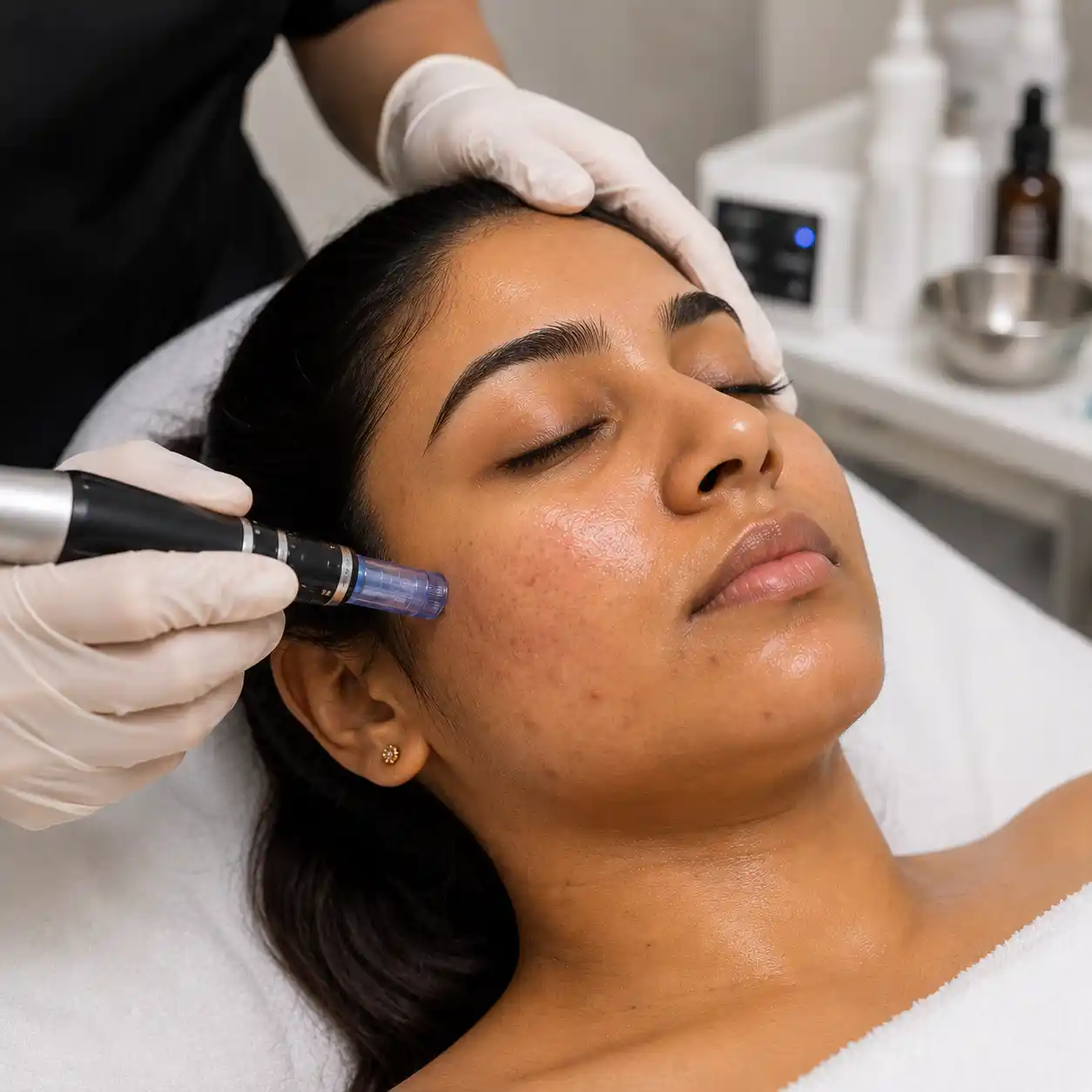
Microneedling
Cosmelan addresses pigmentation — Microneedling addresses deeper structural concerns including depressed acne scars, skin laxity and fine lines through dermal collagen induction. Combined in a staged protocol designed by your dermatologist (microneedling typically starting after week 4–6 of Cosmelan recovery), both treatments deliver comprehensive skin transformation at every skin layer.
Learn More →
HydraFacial
Cosmelan treats and corrects pigmentation — HydraFacial deeply hydrates, nourishes and delivers brightening serums for ongoing skin health. As a complementary maintenance treatment after completing the Cosmelan protocol, HydraFacial supports the skin barrier, enhances long-term luminosity and keeps the even, bright complexion achieved through Cosmelan sustained and radiant.
Learn More →Ready for Even, Pigmentation-Free Skin?
Book a skin assessment at Maynee and receive a personalised Cosmelan Peel plan — including pigmentation type assessment, Fitzpatrick skin typing, recommended protocol and a full, transparent cost breakdown. No obligation to proceed.