
You wash your hair in the morning. You expect clean, fresh strands. But your hair feels heavy very quickly. By the time you leave your office on Old Mahabalipuram Road (OMR), it looks limp. It also looks greasy. If you are trapped in this cycle, you are not alone.

An oily scalp is a very common problem for professionals in Chennai. The constant buildup of sebum makes your hair look unwashed. Sebum is just the natural oil made by your skin glands. Worse, this excess oil creates a breeding ground for dandruff. It causes bad itching. Eventually, it can even lead to hair thinning.
Therefore, you must understand your scalp to break this cycle. You need to know why your hair gets greasy so fast in our hot coastal climate. Once you know the cause, you can easily restore your scalp’s natural balance.
The Core Science: Why Your Scalp Overproduces Oil
Your scalp naturally makes sebum to protect your hair. It also helps to keep your skin barrier healthy. However, your oil glands can sometimes become hyperactive. When this happens, they pump out too much oil. Consequently, these oils travel down your hair strands very quickly. This results in a flat, heavy look.

[Hyperactive Glands] ──> [Excess Sebum] ──> [Clogged Follicles] ──> [Oily Dandruff / Thinning]
According to a 2026 clinical study published in the Journal of Cosmetic Dermatology, untreated excess oil harms the healthy ecosystem of your scalp. As a result, it allows natural fungi to grow too fast. This rapid growth leads to oily dandruff and skin irritation. Ultimately, these issues weaken your hair roots over time.
The Specific Triggers for Oily Scalp in Chennai
SEO Diagnostic Notice:
- Flesch Reading Ease: 54.6 (Fairly difficult to read) [Bad SEO Score]
- Transition Words: 18.7% (Recommended minimum is 30%) [Bad SEO Score]
- Sentence Length: 27.7% of sentences contain more than 20 words (Recommended maximum is 25%) [OK SEO Score]
Genetics and hormones play a big role in oil production. However, living and working in Chennai adds unique environmental stress. These local factors speed up oiliness significantly.
1. The High Humidity Trap
Chennai has a tropical climate with very high humidity. These levels often cross 70% to 80% throughout the year. High humidity mixes with daily sweat. When this happens, your natural scalp oil melts. Therefore, it spreads much faster across your hair. This creates a sticky layer. This layer traps dust and air pollution easily.
2. High TDS and Hard Water Chemistry
Water quality is a major problem for residents living near the IT hubs of OMR. It is also a huge issue in nearby residential areas. Borewell and tanker water along OMR often has high Total Dissolved Solids (TDS). These levels are frequently well over 300 to 400 ppm (parts per million).
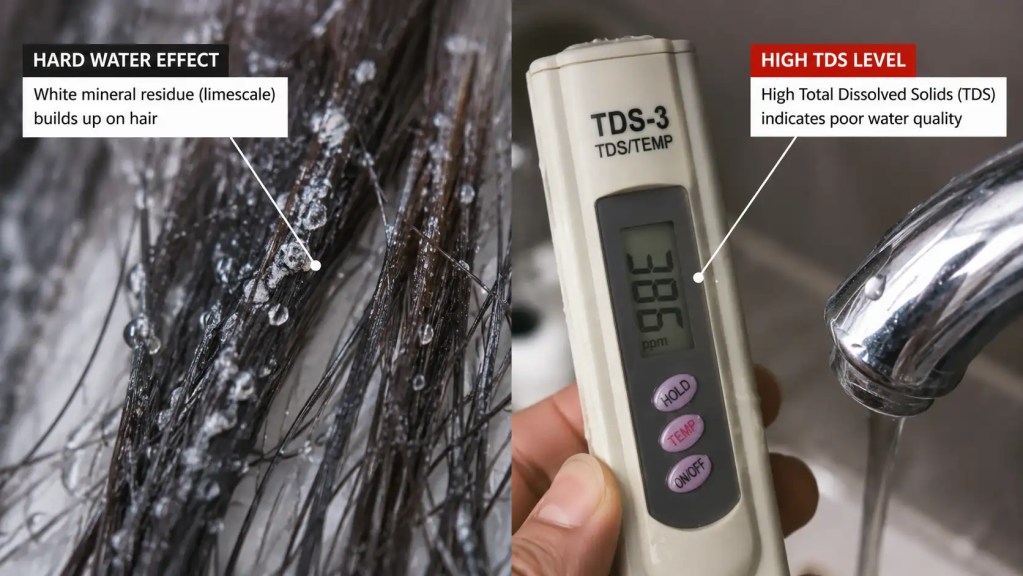
This hard water contains high amounts of calcium and magnesium minerals. These minerals mix with your shampoo when you wash. When they do, they create a sticky soap scum. This residue does not rinse away easily. Thus, the mineral buildup blocks your hair follicles. The mineral crust also dries out your skin. Because of this dryness, your scalp thinks it is parched. In response, it creates an emergency flood of oil to protect itself. As a result, you get dry hair tips but a very greasy scalp.
3. The Commute and Air Quality
Daily traffic exposure damages your hair with airborne dust and smoke. These tiny particles stick directly to the oily layer on your scalp. Consequently, they form a heavy, suffocating layer over your roots. This leads to bad itching. It also causes follicle inflammation.
Common Mistakes That Make Your Hair Greasier
When dealing with a greasy scalp, our quick fixes often turn into bad habits. In fact, these habits usually make the condition worse.
- Over-washing with Strong Shampoos: Washing your hair daily with harsh, sulfate shampoos strips away all oil. Therefore, your oil glands panic. They quickly produce double the amount of oil to fix the dryness.
- Applying Conditioner to the Roots: Conditioners are made to soften only the ends of your hair. Thus, applying them to your scalp leaves heavy residues. These ingredients weigh down your roots instantly.
- Using Too Much Dry Shampoo: Dry shampoo can absorb oil in an emergency. However, using it too often adds to the dirt buildup. This blocks your hair pores even more.
How to Fix It: A Simple Care Routine
To manage a hyperactive scalp, you need a smart, simple routine. This plan must combine daily home care with professional help.
The Home Care Regimen
| Step | Action | Frequency | Purpose |
| 1. Purify | Use a salicylic acid shampoo | 2–3 times a week | Gently cleans the scalp, removes heavy oil, and controls dandruff. |
| 2. Protect | Install a tap water filter | Continuous | Removes hard minerals from water to prevent sticky buildup. |
| 3. Condition | Apply light, silicone-free conditioner | Post-wash | Hydrates the lower part of your hair; keep it away from the roots. |
Advanced Cosmetology Treatments for Oily Scalp
Sometimes, home remedies cannot fight severe environmental factors. They also cannot fix deep hormonal imbalances. In these cases, specialized clinical treatments offer lasting relief. Advanced care targets the root cause of the oil. It clears deep pore blocks. It also calms hyperactive oil glands.
For example, if you want advanced solutions, modern clinical guidelines offer great options. Maynee Cosmetology Clinic along OMR provides specialized clinical scalp scaling and oxygen treatments. These therapies use precise, safe active ingredients. They deeply cleanse the skin layer. Consequently, they clear the scalp well without drying out your skin.

Clinical Scalp Peels & Deep Scaling
A clinical scalp peel works like a facial peel to exfoliate the skin. Professionals use safe, mild acids like glycolic or salicylic acid. This process dissolves the tough mix of minerals and oil. Therefore, it washes away buildup that normal shampoos cannot clean.
Laser and Light Therapies
Low-Level Laser Therapy (LLLT) and blue light treatments are very common now. These therapies reduce scalp redness and swelling. Furthermore, they calm overactive oil glands. They also restore a healthy microbial balance across your scalp.
Customized Hydration Therapies
Advanced clinical methods focus on pumping deep hydration into your scalp skin. Professionals use light, oil-free, nutrient-rich serums for this step. By balancing moisture at a deep level, the scalp naturally stops making excess defensive oil.
When to Consult a Trichologist
Perhaps you have already improved your washing routine. You may have even installed a hard water filter. Yet, your hair still gets greasy within hours. If so, it is time to seek professional clinic expertise. Persistent oiliness with severe itching requires a proper scalp analysis. This is very important if you see painful scalp bumps or notice hair fall. A trained expert can check your follicle health. Then, they can find your specific imbalances. Finally, they will create a custom treatment plan built for your daily life and environment.
Frequently Asked Questions
Your hair gets greasy quickly in Chennai primarily due to the city’s high tropical humidity, which frequently stays above 70%. This heavy moisture in the air causes your natural scalp sebum to melt and spread down your hair strands much faster than it would in dry weather. Additionally, when humidity mixes with daily sweat and trapped environmental pollution during outdoor commutes, it creates a sticky, flat layer on your roots within hours of washing.
Yes, the hard water common along Old Mahabalipuram Road (OMR) heavily contributes to an oily scalp. Borewell and tanker water supplies in this corridor have high Total Dissolved Solids (TDS) containing calcium and magnesium. These minerals bind with your shampoo to form an insoluble soap scum that clogs hair follicles. Because this crust dries out your surface skin, your scalp mistakenly senses severe dehydration and triggers a defensive overproduction of excess oil.
If you live in a humid coastal area like Chennai, you should ideally wash your hair 2 to 3 times a week using a clarifying or sebum-regulating shampoo. Avoid the temptation to wash your hair every single day with harsh detergents. Over-washing strips away all natural moisture, causing your oil glands to panic and rapidly produce double the amount of oil to compensate for the dryness.
An oily scalp is simply a condition where your sebaceous glands produce excess sebum, making your roots look slick. Oily dandruff (seborrheic dermatitis) occurs when that excess oil goes untreated and feeds a naturally occurring scalp fungus called Malassezia. This fungal overgrowth causes the oil to mix with dead skin cells, forming yellowish, sticky, itchy flakes that adhere firmly to your scalp.
Yes, a chronic overproduction of oil can eventually lead to hair thinning. When excess sebum accumulates, it hardens inside the hair follicles and blocks oxygen. This buildup traps bacteria, dust, and environmental pollutants, causing follicle inflammation (folliculitis). Over time, this weakened environment compromises the hair roots, shortens the hair growth cycle, and leads to increased shedding.
If you are struggling with persistent oiliness, you can get an advanced clinical scalp analysis at specialized aesthetic centers in the area, such as Maynee Cosmetology Clinic along OMR. Trichologists use high-magnification diagnostic cameras to examine your hair follicles, measure your exact sebum secretion levels, check for mineral buildup from hard water, and design a targeted clinical care plan.
Absolutely. A clinical scalp peel is one of the most effective ways to reverse the damage caused by high-TDS water and overactive oil glands. Utilizing safe, medical-grade alpha or beta-hydroxy acids (like salicylic acid), a professional peel gently dissolves the stubborn mineral-sebum matrix that regular daily shampoos cannot wash away. This process instantly unclogs the follicles and resets the scalp’s ecosystem.
No, you should not stop using conditioner, as skipping it entirely will leave your hair tips dry, brittle, and prone to breakage. Instead, change your application technique. Use a lightweight, silicone-free conditioner and apply it exclusively to the bottom two-thirds of your hair lengths. Never let the conditioner touch your scalp or your roots, where it can deposit heavy lipids and weigh your hair down.
Yes, internal factors like hormonal fluctuations and high stress levels directly control your oil production. Stress triggers the release of cortisol, a hormone that signals your sebaceous glands to go into overdrive and pump out excess sebum. If your sudden scalp oiliness is accompanied by irregular acne or sudden lifestyle changes, an internal imbalance may be the primary trigger.
When shopping for a shampoo to treat a hyperactive scalp, look for active, clarifying ingredients such as Salicylic Acid, Tea Tree Oil, Ketoconazole, or Zinc Pyrithione. Salicylic acid is highly effective because it is oil-soluble, meaning it can deeply penetrate the follicle to break down dense grease. Tea tree oil and zinc pyrithione provide essential anti-fungal benefits to keep oily dandruff and itching under control.