
Do you often see white flakes on your dark clothes? If so, you might think you have regular dandruff. But a flaky scalp can mean many different things. For example, it could be dandruff, scalp psoriasis, or seborrheic dermatitis.
These three issues look very similar at first glance. Therefore, people often treat them the wrong way. This mistake can make your skin itch even more. Consequently, you must learn how to tell the difference between dandruff and scalp psoriasis and dermatitis.
In this guide, we will look at each condition. We will also see how local weather and hard water affect your hair.
1. Quick Visual Guide for Your Scalp
First, let us look at how these three issues compare. You can look for clues by checking the color and texture of the flakes.
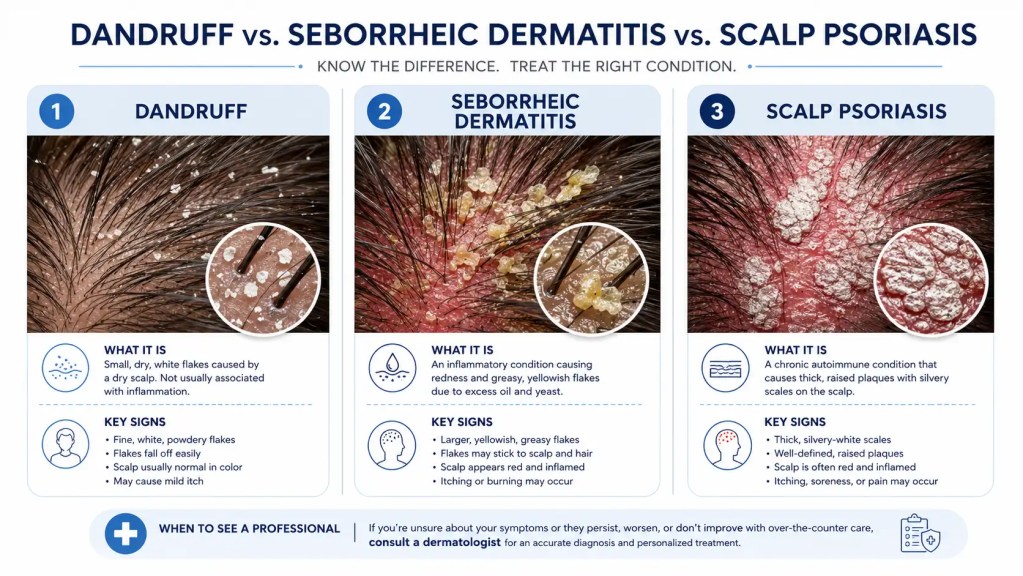
As shown above, the color of the scale tells a big story. Next, let us break down each condition one by one.
2. What is Regular Dandruff?
Dandruff is the most common scalp problem in India. In fact, it affects almost half of all adults.
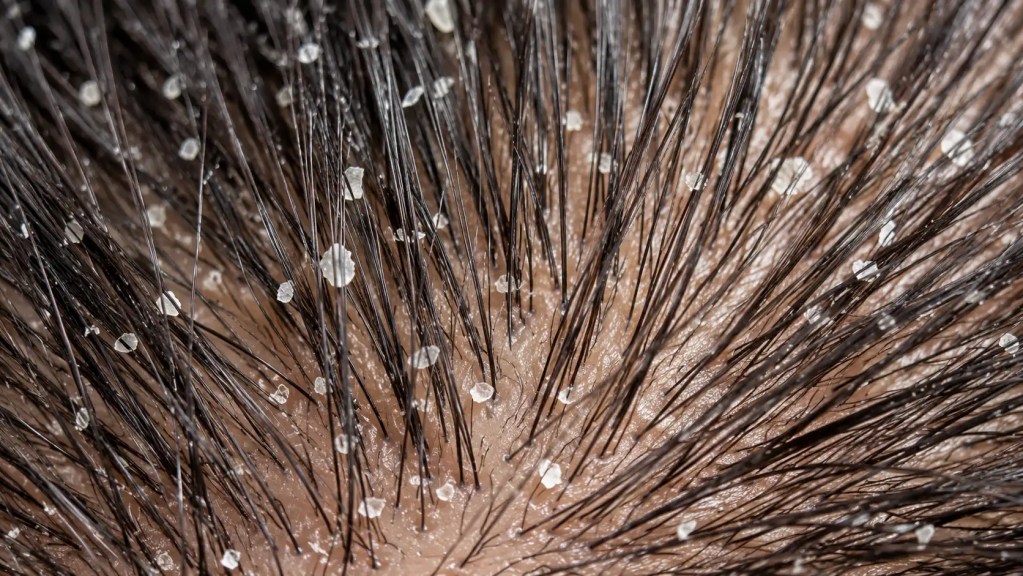
The Visual Signs
- Flake Color: The flakes are usually white or clear grey.
- Texture: They feel dry and powdery. So, they fall easily when you brush your hair.
- Skin Look: The skin under the flakes looks normal. Specifically, there is no deep redness or swelling.
Why It Happens
A tiny fungus lives on everyone’s head. This fungus is called Malassezia. Usually, it causes no issues at all. But sometimes, your scalp makes too much natural oil. Then, the fungus grows too fast. As a result, your skin sheds cells quickly, which creates dry flakes.
3. What is Seborrheic Dermatitis?
Think of this as a worse type of dandruff. It is a long-term inflammatory issue that hits oily areas.
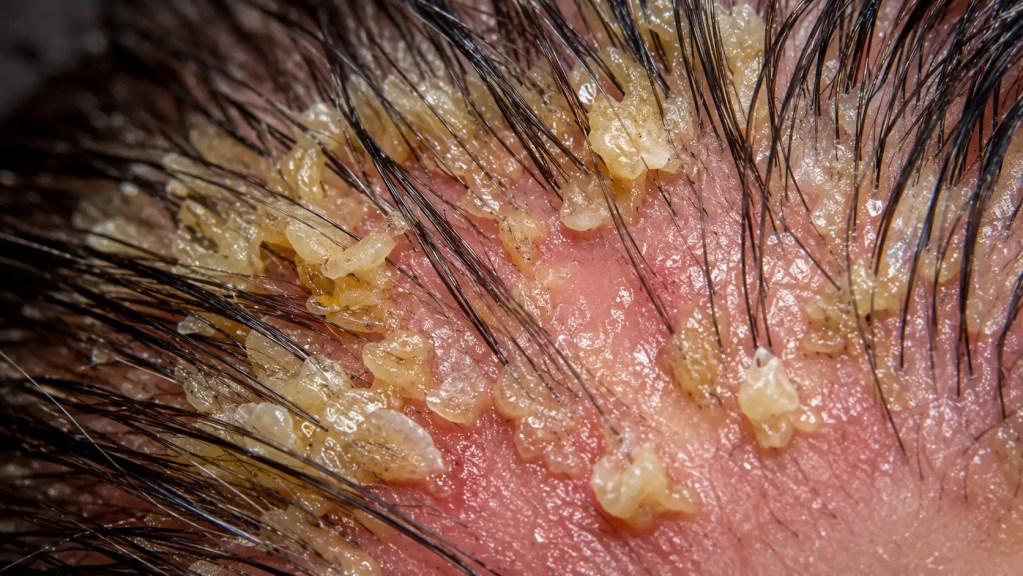
The Visual Signs
- Flake Color: The flakes look yellow or dark cream.
- Texture: They feel greasy, waxy, and sticky. Thus, they clump together and stick to your hair roots.
- Skin Look: The skin underneath looks pink, raw, and highly irritated.
Why It Happens
This issue also involves the Malassezia fungus. However, your body has a strong immune reaction to it. Because of this reaction, your skin becomes red and oily. Also, it can spread to your eyebrows, ears, and nose. This makes seborrheic dermatitis vs dandruff scalp a very common debate for people with oily skin.
4. What is Scalp Psoriasis?
Psoriasis is completely different from the first two problems. It is not caused by oil or a fungus. Instead, it is an autoimmune issue. This means your body attacks its own healthy cells by mistake.

The Visual Signs
- Flake Color: The scales have a bright, silvery-white sheen.
- Texture: They form thick, hard, raised patches on the skin.
- Skin Look: The plaques underneath look deep red or purple.
Why It Happens
Normally, your body takes a full month to grow new skin cells. But with psoriasis, your body makes new cells in just a few days. Because the old cells do not fall off in time, they pile up. This build-up forms thick, hard scales. Furthermore, these patches can crack and bleed if you scratch them.
5. Local Hard Water and Sweat Crises
Your local environment plays a massive role in scalp health. For instance, people living in coastal cities face tough challenges every day. Let us look at the unique problems faced by residents in neighborhoods like Velachery.

The Hard Water Problem
First, many homes rely on ground water or tanker water supply. This water contains high amounts of minerals like calcium. So, it is called hard water. Hard water prevents your shampoo from rinsing out completely. Instead, it leaves a heavy mineral layer on your hair roots. This buildup destroys your skin’s natural shield. Consequently, it triggers a severe, dry, itchy scalp.
The Humidity Factor
Second, coastal weather means high humidity and lots of sweat. When sweat sits on your skin, it mixes with natural sebum. This mixture forms a perfect home for fungal growth. Therefore, oily flaking gets much worse during the hot summer months.
Many people search for a reliable dry itchy scalp treatment Velachery residents can trust to fix this cycle. If your flakes do not go away, you can get a professional scalp check at a local hub like Maynee Cosmetology Clinic, Velachery. They can test your hair roots to find the exact cause of your flaking.
6. Comparison Checklist
To make things easy, here is a simple comparison chart. You can use it to check your symptoms at home.
| Feature | Regular Dandruff | Seborrheic Dermatitis | Scalp Psoriasis |
| Scale / Flake Color | White, translucent, or clear grey | Yellowish, dark cream, or honey-colored | Bright, silvery-white, or powdery metallic grey |
| Texture & Feel | Dry, small, loose, and highly powdery | Greasy, waxy, thick, and highly sticky | Thick, raised, hard, and well-defined plaques |
| Shedding Pattern | Drops easily onto shoulders with minor brushing | Clumps together, sticks tightly to the hair shafts | Flakes off in larger, crusty chunks when disturbed |
| Underlying Skin Redness | Absent or very minimal | Mild to intense pinkish-red raw irritation | Deep, dusky red or distinct purplish plaques |
| Border Definition | Blends evenly across the whole scalp | Diffuse, oily patches with irregular edges | Sharply defined, raised edges you can feel easily |
| Anatomical Face Spread | Confined strictly to the hair-bearing scalp | Commonly spreads to eyebrows, ears, and nose creases | Rarely crosses to the face, but can hit the hairline |
| Bleeding Risk | Does not bleed under regular circumstances | Seldom bleeds, unless aggressively scraped | Bleeds easily in pinpoint drops if scales are picked |
| Primary Root Cause | Overgrowth of Malassezia fungus on excess sebum | Intense immune reaction to Malassezia fungus | Autoimmune acceleration of skin cell renewal cycles |
| Environmental Triggers | Dry air, cold weather, mild product buildup | Intense coastal humidity, heavy sweat, high stress | Physical trauma (Koebner phenomenon), stress, infections |
| Hard Water Impact | Creates a dry, itchy calcium buildup layer | Traps sticky oils, worsening the fungal breeding ground | Aggravates sensitive plaques, provoking severe itching |
| Primary Treatment Goal | Reduce fungus and clear light flakes | Control oily sebum production and inflammation | Soften hard plaques and slow rapid cell turnover |
| Key Active Ingredients | Zinc Pyrithione, Salicylic Acid | 2% Ketoconazole, Selenium Sulfide | Coal Tar, High-strength Salicylic Acid, Clobetasol |
7. How to Clean and Treat Your Scalp
Because these issues have different causes, they need different treatments. Here is how to handle each one safely.
Treating Dandruff
You can easily treat regular dandruff at home. For best results, use a best shampoo for flaky scalp in India that contains Zinc Pyrithione or Salicylic Acid. Also, try to use filtered water to wash your hair. This reduces hard water damage.
Treating Dermatitis
To fight grease and fungus, you need a stronger formula. Look for a medicated wash with 2% Ketoconazole.
Expert Hair Tip: Do not rinse your medicated shampoo off right away. Instead, leave the foam on your scalp for 3 to 5 minutes. This gives the active ingredients enough time to work.

Treating Psoriasis
Psoriasis needs extra care because the skin is very sensitive. You can use shampoos with Coal Tar to slow down cell growth. Salicylic acid can also help soften the hard plaques. However, you should avoid harsh scrubbing. If the patches remain thick, you may need targeted laser care or prescription lotions from a skin expert.
When to See a Hair Specialist
In conclusion, minor flakes usually disappear with a good anti-dandruff routine. But if your scalp stays red, bleeds, or hurts, you should stop trying random products. A professional evaluation will pinpoint the exact issue and save your hair from long-term damage.
Frequently Asked Questions
You can tell the difference by looking closely at the color and thickness of the flakes. Regular dandruff creates thin, white, or clear flakes that fall off your hair easily. On the other hand, scalp psoriasis forms thick, raised patches covered with hard, silvery-white scales that stick tightly to the skin.
Yes, the high mineral count in Velachery’s groundwater can heavily worsen your scalp health. Hard water leaves a crusty calcium layer on your hair roots. This buildup destroys your skin’s natural protective shield. Consequently, it triggers severe itching and traps oil, which makes mild flaking look and feel much worse.
Yellow, greasy flakes are a classic sign of seborrheic dermatitis rather than standard dandruff. This problem happens when your scalp makes too much natural oil. The excess oil combines with dead skin cells and Malassezia fungus. This chemical process creates sticky, dark cream-colored scales.
No, scalp psoriasis is completely non-contagious. You cannot catch it by sharing combs, pillows, or through physical contact. It is a genetic, internal autoimmune condition. This means your own immune system accidentally speeds up skin growth, which causes cells to pile up quickly.
The most effective over-the-counter shampoos in India contain 2% Ketoconazole or Selenium Sulfide. These active ingredients target and reduce the Malassezia fungus. For best results, you must leave the lather on your head for 3 to 5 minutes before rinsing it away completely.
Bleeding usually means you are dealing with scalp psoriasis instead of common dandruff. Psoriasis creates hard, stuck-on plaques with delicate blood vessels right underneath them. If you pull or scratch these scales off, the tiny vessels tear. This reaction causes immediate pinpoint bleeding.
Chennai’s intense coastal humidity causes constant sweating throughout the year. When sweat sits on your head, it mixes with natural skin oils. This warm, wet mix creates a perfect breeding ground for fungal growth. Therefore, seborrheic dermatitis flare-ups are very common during humid months.
Yes, high stress levels are a major trigger for both scalp psoriasis and seborrheic dermatitis. Stress releases chemical signals that spike inflammation in your body. It also alters your oil glands. As a result, your scalp becomes highly red, itchy, and inflamed within days.
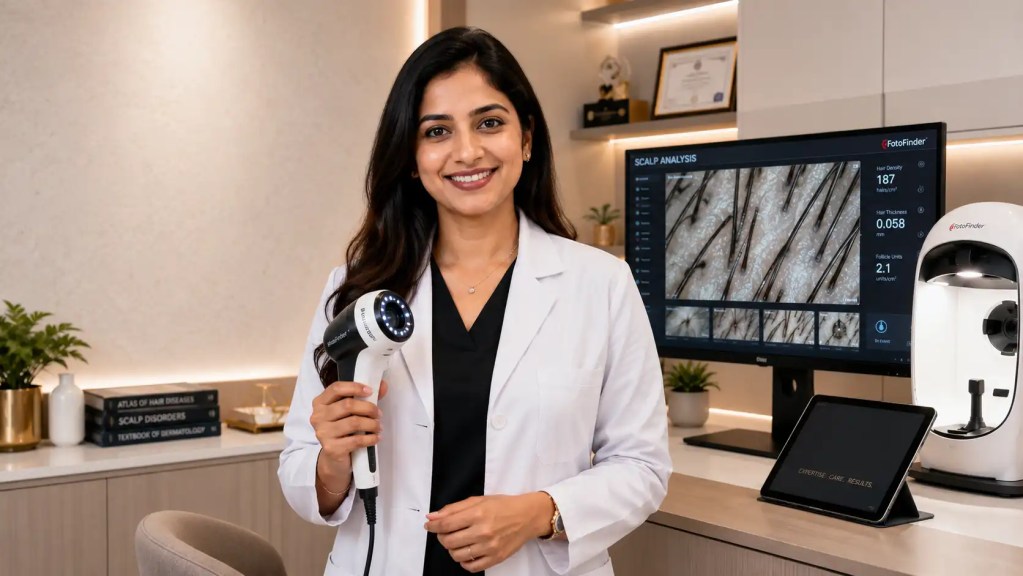
You can get a specialized, professional hair and scalp analysis at Maynee Cosmetology Clinic, Velachery. Their team uses advanced tools to look closely at your hair roots. This helps separate complex autoimmune conditions from simple, local hard water irritation.
No, standard anti-dandruff shampoos will not clear up scalp psoriasis. Psoriasis is an autoimmune problem that needs targeted ingredients like Coal Tar or Salicylic Acid to break down hard scales. Using a basic dandruff shampoo can dry out the skin and worsen the underlying inflammation.