

Permanent Hair.
Natural Hairline.
Your Own Follicles.
Chennai's most advanced FUE and Sapphire FUE hair transplant. We move healthy, permanent follicles from your donor zone into thinning areas — creating a natural, undetectable hairline that lasts a lifetime. Trichoscopy-guided. Certified surgeon-dermatologists at Maynee.
Which Hair Transplant
Technique Is Right for You?
We offer three proven transplant techniques. Your dermatologist recommends the best option after trichoscopy — based on your scalp, donor density, and goals.
Sapphire FUE
Uses synthetic sapphire-tipped blades to create ultra-fine incisions. So the channels are smoother, tissue trauma is lower, and healing is faster. Sapphire FUE also allows higher graft density — giving you fuller coverage from the same donor supply. Most patients at Maynee choose this technique.
FUE (Follicular Unit Extraction)
The gold standard of modern hair transplant. Each follicle is extracted individually using a micro-punch and implanted into the thinning zone. Therefore, there is no linear scar — only tiny, invisible dot marks that heal within days. FUE suits patients wanting shorter hairstyles and a quick return to daily life.
DHI (Direct Hair Implantation)
A refined version of FUE using a Choi implanter pen to place grafts directly — without creating channels first. Because grafts spend less time outside the scalp, survival rates are high. DHI is ideal for adding density to existing hair without shaving the entire scalp, and for hairline precision work.

Your Own Hair,
Moved to Where It Belongs.
A hair transplant moves permanent follicles from the back and sides of your scalp — where hair is DHT-resistant — into thinning or bald areas. The result is real, permanent hair that grows naturally for the rest of your life.
Hair loss happens because follicles in certain zones are sensitive to DHT — a hormone that shrinks them over time. However, follicles at the back and sides of the scalp are genetically resistant to DHT. So when these follicles are moved to a thinning zone, they keep their genetic coding. Therefore, they continue to produce permanent hair in their new location.
Modern FUE and Sapphire FUE techniques make the procedure minimally invasive. There is no linear scar, no stitches, and no long recovery. Your hair grows back gradually over 12 months — and the result looks completely natural because it is your own hair.
How a Hair Transplant Works — In Three Steps
Six Ways a Hair Transplant
Changes More Than Your Hair
A hair transplant does more than restore hair. It restores how you feel about your appearance — with results that are permanent, natural, and entirely your own.
Restores Permanent Hair
Transplanted follicles are DHT-resistant. So they keep growing permanently in their new location. Unlike medications, which require ongoing use, a hair transplant is a one-time procedure. Furthermore, the hair you grow is real — not synthetic, not a system, not temporary.
Designs a Natural Hairline
A good hairline looks like it was never lost. At Maynee, your surgeon designs your hairline based on your face shape, age, and donor density — not a template. Each graft is implanted at the precise angle and direction to match natural hair growth. As a result, the outcome is completely undetectable.
Covers the Crown and Temples
Beyond the hairline, grafts can be placed on the crown, temples, and diffuse thinning zones. Therefore, a transplant can address multiple areas in one procedure. Your dermatologist maps out the full plan using trichoscopy — so graft allocation is precise and coverage is maximised.
Works for Beard and Eyebrow Restoration
Hair transplant is not limited to the scalp. Follicles from the scalp donor zone can also be transplanted into the beard and eyebrow areas. This is ideal for men wanting a fuller beard, or patients who have lost eyebrow density due to over-plucking, trauma, or medical conditions.
Leaves No Visible Scar
FUE and Sapphire FUE leave only tiny dot marks at the donor site — not a visible linear scar. These heal within 7–10 days. So you can keep your hair short after the procedure without anyone noticing the donor area. This is a major advantage over older FUT strip surgery, which leaves a permanent linear scar.
Pairs with Exosome Therapy for Better Results
Post-transplant exosome therapy significantly improves graft survival and accelerates follicle activation. Exosomes reduce scalp inflammation, support healing, and wake up newly implanted follicles faster. Because of this, many patients see growth begin earlier — and at higher density — when both treatments are combined.
Hair Transplant at Maynee —
Step by Step
Every hair transplant at Maynee starts with a trichoscopy assessment. This confirms your donor density, maps your recipient zones, and gives you an exact graft count before you commit to anything.
Trichoscopy Assessment & Graft Planning
Your first visit is a full scalp consultation. A certified dermatologist-surgeon reviews your hair loss pattern, medical history, and lifestyle. Trichoscopy maps your donor density and identifies every thinning zone with precision. From this data, your surgeon designs your hairline, calculates your graft count, and confirms the right technique for your case. You leave with a complete, personalised transplant plan — and a transparent cost breakdown — before any decision is made.
Preparation & Local Anaesthesia
On the day of surgery, your scalp is gently washed and prepped. The donor and recipient zones are marked. Local anaesthesia is then administered to both areas — so you are completely comfortable throughout. Most patients are surprised by how little they feel once the anaesthesia is active. The procedure is done in a sterile clinic setting, and you remain awake and at ease the entire time.
Graft Extraction from the Donor Zone
Using a precision micro-punch (or sapphire blade for Sapphire FUE), individual follicular units are extracted from the donor zone one by one. Each graft contains 1–4 hairs. Extraction is methodical and spread across the donor area — so no visible thinning is left behind. Extracted grafts are immediately stored in a preservation solution to maintain viability while implantation channels are prepared.
Channel Creation & Graft Implantation
Fine channels are created in the recipient zones at the exact angle, direction, and depth that matches natural hair growth. Then, each extracted graft is placed precisely into its channel. This step determines the final naturalness of your hairline — so your surgeon handles it directly. The density and placement follow the design agreed in your consultation. For DHI, channel creation and implantation happen simultaneously using the Choi pen.
Immediate Aftercare & Scab Healing
After the procedure, small scabs form over each implanted graft. These fall off naturally within 7–10 days. Your surgeon provides a step-by-step aftercare protocol — including how and when to wash your hair from day 3, which products to use, sleep position for the first 3 nights (head elevated), and activities to avoid. You can return to desk work within 3–5 days. Most people around you will not notice anything unusual after the first week.
Growth Phase & Long-Term Results
Transplanted hairs shed at 2–6 weeks — this is normal shock loss and means the follicles are entering their growth cycle. New growth begins at 3–4 months. By months 6–8, density improves significantly. Full, permanent results are visible at 12 months. Trichoscopy progress reviews at Maynee track your growth at every stage. Furthermore, post-transplant exosome therapy can be added to accelerate graft activation and improve overall density.
Before & After Surgery — Key Instructions
Before surgery: Wash your hair the morning of the procedure. Avoid alcohol for 5 days prior. Stop blood-thinning supplements as advised by your surgeon. Eat a light meal before arriving. Wear a loose, button-front shirt so you do not disturb the grafts when changing afterward. Arrange transport home — do not drive yourself on the day.
After surgery: Sleep with your head elevated for 3 nights to reduce swelling. Do not wash your scalp for 48 hours. From day 3, follow the prescribed gentle wash protocol. Avoid direct sun on the scalp for 2 weeks. Avoid swimming pools and steam rooms for 4 weeks. Resume exercise gradually after 2 weeks. Follow your prescribed maintenance protocol — this directly supports graft survival and speeds up growth.
The Advantages of Hair Transplant
at Maynee Chennai
A hair transplant at Maynee is more than surgery. Every step — from trichoscopy planning to post-operative care — is managed by the same certified dermatologist-surgeon, not technicians.
Permanent Result — Once
A hair transplant is a one-time procedure with permanent results. Once transplanted follicles establish in the recipient zone, they produce hair for life. So you do not need repeated treatments or ongoing medication to maintain the result.
Undetectable, Natural Hairline
Each graft is placed at the exact angle and direction of your natural hair growth pattern. The result looks completely natural because it is your own hair — not a system, plug, or synthetic product. Nobody can tell you had a transplant when it is done well.
Surgeon Performs Every Step
At Maynee, your certified surgeon-dermatologist performs both extraction and implantation — not technicians. This matters because graft survival and hairline aesthetics depend entirely on precision at every step. Therefore, you never leave the operating room wondering who actually did your surgery.
No Linear Scar
FUE and Sapphire FUE leave only tiny, scattered dot marks at the donor site. These heal invisibly within days. So you can wear your hair short — or even buzz-cut — after recovery. This is a significant advantage over older FUT strip surgery, which leaves a permanent scar across the back of the scalp.
Trichoscopy at Every Stage
Trichoscopy is performed at consultation, pre-surgery mapping, and all follow-up visits. This means graft planning is data-driven — not estimated. Progress is tracked objectively at every stage. So you always know exactly what is happening with your follicles, not just how your hair looks in the mirror.
Transparent Cost — No Surprises
At Maynee, you receive a full, itemised cost breakdown after your trichoscopy assessment — before you decide. The price is based on your exact graft count and chosen technique. There are no hidden charges, no vague packages, and no pressure on the day of consultation.
Post-Transplant Exosome Option
Exosome therapy after a hair transplant improves graft survival and speeds up follicle activation. It reduces post-operative inflammation and supports faster recovery. Because of this, patients who combine transplant with post-operative exosome sessions typically see earlier and denser growth than those who do not.
Tailored for Chennai's Climate
Chennai's heat, UV exposure, and humidity affect scalp healing and long-term hair health. Maynee's post-operative protocols and maintenance plans are specifically designed for this environment. Your aftercare guidance — including sun protection, scalp care, and supplement support — is built around local conditions, not generic instructions.
Is a Hair Transplant
Right for You?
The best candidates have a stable donor zone and active — but thinning — follicles in the recipient area. A trichoscopy at Maynee confirms this and gives you realistic expectations before you decide.
Ideal Candidates
-
Men with Hairline Recession or Crown Thinning
Male pattern baldness at Norwood scale II–VI. The donor zone is strong and DHT-resistant. Therefore, grafts transplanted to the hairline and crown will grow permanently — stopping the visual progression of baldness.
-
Women with Stable Pattern Hair Loss
Women with female pattern baldness or traction alopecia who have a defined donor zone and stable, predictable loss pattern. A trichoscopy confirms whether the donor area is viable and sufficient for transplant.
-
Patients with Scarring Alopecia or Trauma
Hair loss caused by scars, burns, or traction alopecia — where follicles in the affected area are permanently inactive. Grafts from a healthy donor zone can restore growth in these regions, even where the cause of loss is not hormonal.
-
Anyone Wanting to Repair a Previous Transplant
Patients who had a hair transplant elsewhere and are unhappy with the hairline design, graft density, or visible plugs. Corrective transplant work is possible — and is assessed individually by trichoscopy to evaluate what can be improved.
-
Anyone Wanting Beard or Eyebrow Restoration
Scalp follicles can be transplanted into sparse beard zones or thinning eyebrows. This works well for men wanting a fuller beard, or patients who have lost eyebrow density through medical conditions, over-plucking, or trauma.
Discuss with Your Surgeon First If You Have:
Hair transplant is safe when properly assessed. However, careful review is needed before proceeding if you have:
- Insufficient donor density — if the donor zone does not have enough viable grafts, coverage will be limited. Trichoscopy confirms this before the plan is made.
- Active or rapidly progressing hair loss — transplanting into an unstable loss zone can result in continued thinning around the transplanted area. Stabilising loss first is recommended.
- Active scalp infections, psoriasis, or inflammatory scalp conditions — these must be treated before surgery to ensure safe healing.
- Blood clotting disorders or anticoagulant medications — your surgeon will assess safety and provide guidance on stopping certain medications before the procedure.
- Unrealistic expectations about coverage or density — a trichoscopy gives you a clear, honest picture of what is achievable from your specific donor supply.
Not Sure If a Hair Transplant Is the Right Step?
A trichoscopy assessment at Maynee answers this clearly — confirming your donor density, graft count, expected coverage, and whether a non-surgical approach like exosome therapy would serve you better first.
Book Hair Assessment
Hair Transplant
Before & After
Real results from patients treated at Maynee. Clinical trichoscopy photography — no filters, no editing.
 Before
 After
After
Individual results vary. Clinical trichoscopy photography shown with full patient consent. Results depend on hair loss stage, graft count, technique, and post-operative care. Earlier treatment consistently produces better and more complete outcomes.
Meet Your Hair Transplant Surgeon-Dermatologists
Every hair transplant at Maynee is planned and performed by a certified surgeon-dermatologist. Not technicians. Not assistants. Your surgeon is present at every stage of your procedure.
 Lead Surgeon-Dermatologist
Specialist Name
Add your surgeon's biography here. Include qualifications (MBBS, MD Dermatology), clinical experience in FUE and Sapphire FUE hair transplant surgery, trichoscopy-guided planning expertise, number of procedures performed, and professional memberships such as IADVL or ISHRS. 2–3 sentences recommended.
Real Results,
Real Stories
Hear from patients who chose hair transplant at Maynee Chennai — in their own words.
"I had been avoiding photos for three years because of my receding hairline. The trichoscopy at Maynee showed me exactly what was happening — and exactly what the transplant could achieve. The procedure itself was far more comfortable than I expected. By month eight, my hairline looked natural and dense. I only wish I had done it sooner."
"I was worried about being a woman going for a hair transplant — but the team at Maynee put me completely at ease. The trichoscopy showed my parting was still viable for DHI. No full shave was needed, so I went back to work within four days. By month nine, my parting looked completely natural again. The difference to my confidence is huge."
"I had a transplant at another clinic years ago and was never happy with the result. Maynee did the corrective work — and the difference is remarkable. The surgeon explained the issue clearly, redesigned the hairline properly, and performed the entire procedure himself. My hair now looks genuinely natural for the first time."
Hair Transplant —
Your Questions Answered
Real questions from patients — answered clearly by our certified surgeon-dermatologists. Covering pain, permanence, results, cost, recovery, and more.
Most patients are surprised by how little a hair transplant hurts. Local anaesthesia is applied before extraction and implantation begin — so you feel nothing during the procedure itself. You may notice mild pressure or a tugging sensation during extraction, but not pain. After surgery, the scalp feels tender for 2–3 days. This is easily managed with standard pain relief. The procedure takes several hours, but most patients find it very well tolerated throughout.
Yes. Transplanted follicles come from the donor zone at the back and sides of the scalp — where follicles are genetically resistant to DHT, the hormone responsible for hair loss. Once transplanted, these follicles keep their genetic coding and produce permanent hair in their new location. However, your existing non-transplanted hair can still continue to thin over time. This is why a maintenance protocol — such as exosome therapy or PRP — is often recommended alongside the transplant to preserve surrounding follicles.
Graft count depends on three things: the area to be covered, the density you want to achieve, and your donor supply. As a general guide — hairline restoration needs 1,000–2,000 grafts; adding crown coverage needs 2,000–3,500 grafts; advanced thinning across both zones may need 4,000–6,000 grafts. A trichoscopy assessment at Maynee maps your donor density and recipient zones precisely — so you get an exact graft count, not an estimate, before you commit to anything.
Both techniques extract individual follicles from the donor zone and implant them into the recipient area. The difference is in the blade used to create channels in the recipient area. Standard FUE uses steel micro-blades. Sapphire FUE uses blades made from synthetic sapphire crystal, which are harder, smoother, and sharper. As a result, Sapphire FUE creates finer channels, causes less tissue trauma, and heals faster. It also allows higher graft density — so coverage is fuller from the same donor supply. Most patients at Maynee choose Sapphire FUE for these reasons. See how these compare with FUE vs DHI if you are still deciding between techniques.
Growth follows a predictable timeline. First, transplanted hairs shed within 2–6 weeks after surgery — this is called shock loss and is completely normal. The follicles themselves remain intact beneath the scalp. New growth begins at 3–4 months. By months 6–8, density improves noticeably. Full, final results are visible at 12 months. Trichoscopy reviews at Maynee track your progress at each stage, so you can see follicle-level changes even before the hair is visually obvious.
Recovery is faster than most people expect. You can return to desk work in 3–5 days. Small scabs over the grafts fall off naturally within 7–10 days. Mild swelling around the forehead area is common in the first few days but settles quickly. You should avoid strenuous exercise for 2 weeks, direct sun on the scalp for 2 weeks, and swimming or steam rooms for 4 weeks. Hair can be washed gently from day 3 following the prescribed protocol. Sapphire FUE generally recovers faster than older FUT strip surgery.
Yes — entirely normal. Around 2–6 weeks after surgery, transplanted hairs shed in a phase called shock loss. The hair falls out, but the follicle root remains safely beneath the scalp. The follicle then enters a resting phase before beginning new growth at around 3–4 months. Shock loss happens to almost every patient and does not affect the final result. So do not be alarmed when it occurs — it is simply the follicle resetting before it grows permanently.
Cost depends on your exact graft count, the technique used (FUE vs Sapphire FUE vs DHI), and whether post-operative treatments like exosome therapy are added. In Chennai, hair transplant costs typically range based on graft count — and no honest clinic can quote a final price before assessing your scalp. At Maynee, a full, itemised cost breakdown is given after your trichoscopy assessment, based on your confirmed graft count and plan. There are no hidden charges and no pressure to commit on the day.
Yes. Women can have a hair transplant when they have a stable donor zone and a defined thinning pattern — such as female pattern baldness, frontal fibrosing alopecia, or traction alopecia. DHI is often the preferred technique for women as it does not require a full head shave, so recovery is more discreet. However, diffuse hair loss — where thinning is unpredictable across the entire scalp — may reduce donor suitability. A trichoscopy at Maynee confirms whether transplant is the right option, or whether non-surgical treatments like exosome therapy are more appropriate first.
The best candidates have sufficient donor density at the back and sides of the scalp, a stable or manageable hair loss pattern, and realistic expectations about coverage and density. Age, overall scalp health, and the stage of loss all play a role. A trichoscopy assessment at Maynee is the only accurate way to answer this — it maps your donor density, evaluates recipient zones, and tells you exactly what is achievable from your specific case. It takes the guesswork out completely.
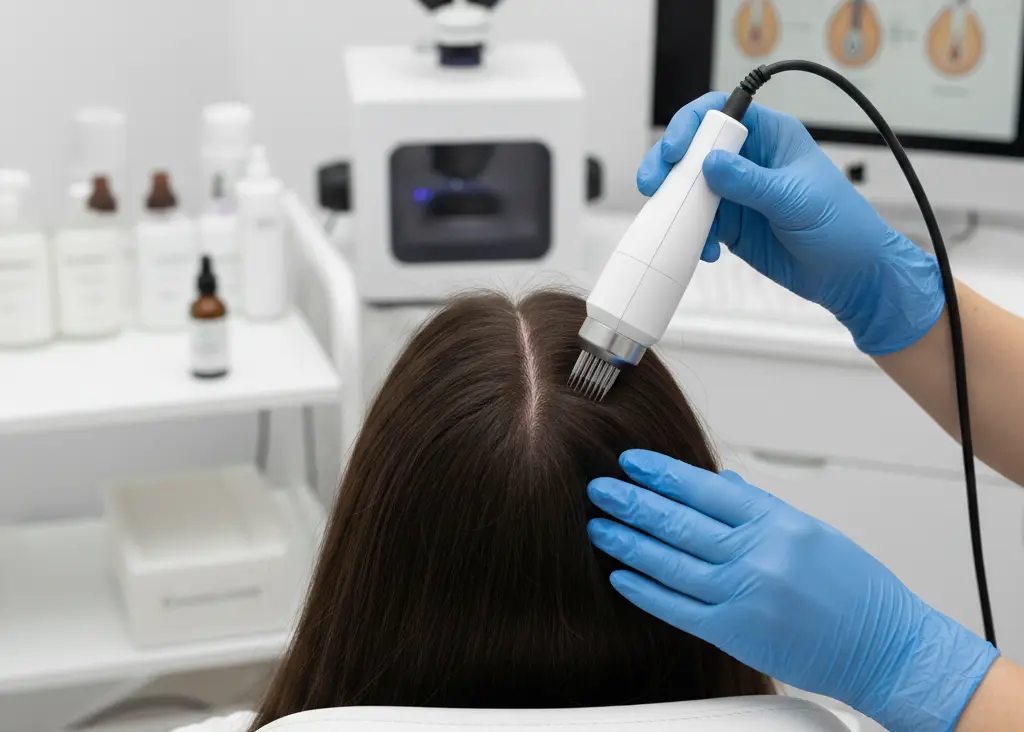
Exosome Hair Treatment
Post-transplant exosome therapy accelerates graft survival and follicle activation. It reduces scalp inflammation and supports faster recovery. Combined with a hair transplant, it produces earlier and denser growth than transplant alone.
Learn More →
Exos-GFC Hair Treatment
Combines Exosomes with Growth Factor Concentrate (GFC) from your own blood for maximum non-surgical hair regrowth. An excellent maintenance treatment post-transplant to support surrounding follicles and prevent further thinning.
Learn More →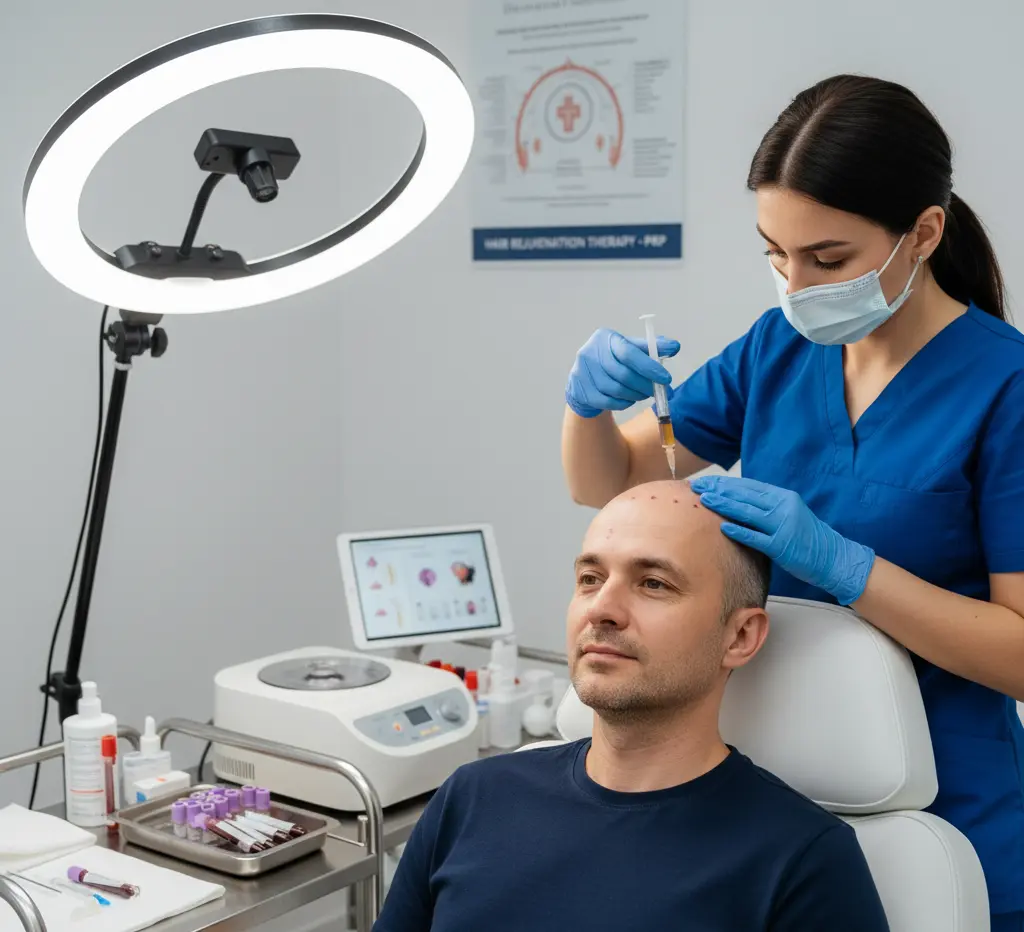
PRP Hair Treatment
PRP uses growth factors from your own blood to strengthen existing follicles. It is often used pre-transplant to improve scalp health, or post-transplant to support surrounding hair and reduce ongoing thinning. A useful part of the long-term maintenance plan.
Learn More →Ready to Restore Your Hair Permanently?
Book a trichoscopy hair assessment at Maynee. Get a personalised transplant plan — with your exact graft count, hairline design, technique recommendation, and full cost breakdown. No obligation to proceed on the day.