
Are you struggling with deep acne scars? Do you feel like your makeup cannot hide the uneven skin? If so, you are definitely not alone. Many people find that active acne goes away. But it often leaves behind deep dents. Therefore, getting smooth skin becomes a tough new battle.
Many people spend a lot of money on creams. They buy expensive skin serums. They hope these products will erase the pits. However, normal skin creams only work on the top surface. Deep acne scars mean there is real damage inside your skin. Because of this, you need medical clinic treatments. These procedures help your body rebuild lost collagen.
So, how do you choose the right fix? First, you must learn about your specific scar type. Let us look at the science behind these marks. Next, we will see how local weather blocks your healing. Finally, we will find out which clinic treatments actually give you smooth skin.
The Nungambakkam Skin Dilemma: Why Chennai Weather Makes Scars Worse
Before we look at fixes, let us check your environment. For example, people who live or work in busy Chennai areas like Nungambakkam face huge skin problems. These local elements turn simple pimples into deep, ugly scars.
1. High Humidity and Trapped Oil
Chennai is very humid for most of the year. In fact, humidity levels stay between 70% and 90%. Because of this, your sweat and natural oils do not dry up easily. Instead, they form a sticky layer on your face. This layer traps daily dust and city pollution. Therefore, it creates a perfect home for acne bacteria. As a result, small pimples quickly grow into painful cystic acne. These deep lumps damage your tissue.
2. The Hard Water Problem
Also, many homes and offices in Nungambakkam use groundwater or borewell water. This local water supply is very hard. This means it has a lot of calcium and magnesium minerals. When you mix hard water with face wash, it leaves a chalky film on your skin. This film harms your skin’s natural shield. Thus, your skin barrier cracks. Bacteria can now go deep into your skin layers. This causes heavy swelling that always ends in deep scars.
3. Extreme Sun Exposure
Additionally, the sun in Chennai is very strong. The UV index often goes above 11. This is a very dangerous level. When hot sunlight hits a fresh scar, it makes the skin produce too much dark pigment. Therefore, Indian skin types easily get dark spots. These dark marks make your scars look much deeper and wider than they really are.
Anatomical Breakdown: What Does Your Scar Look Like?
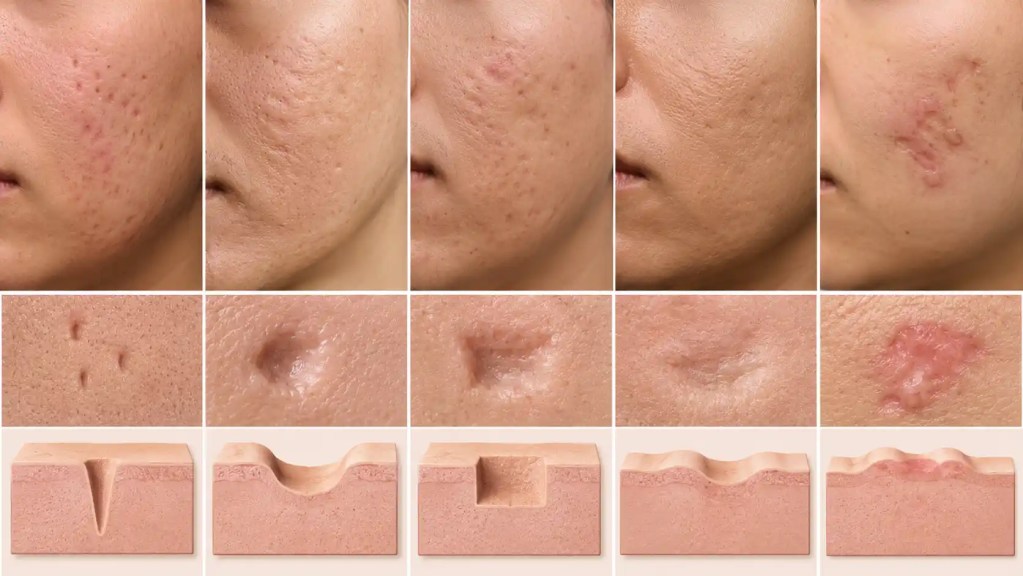
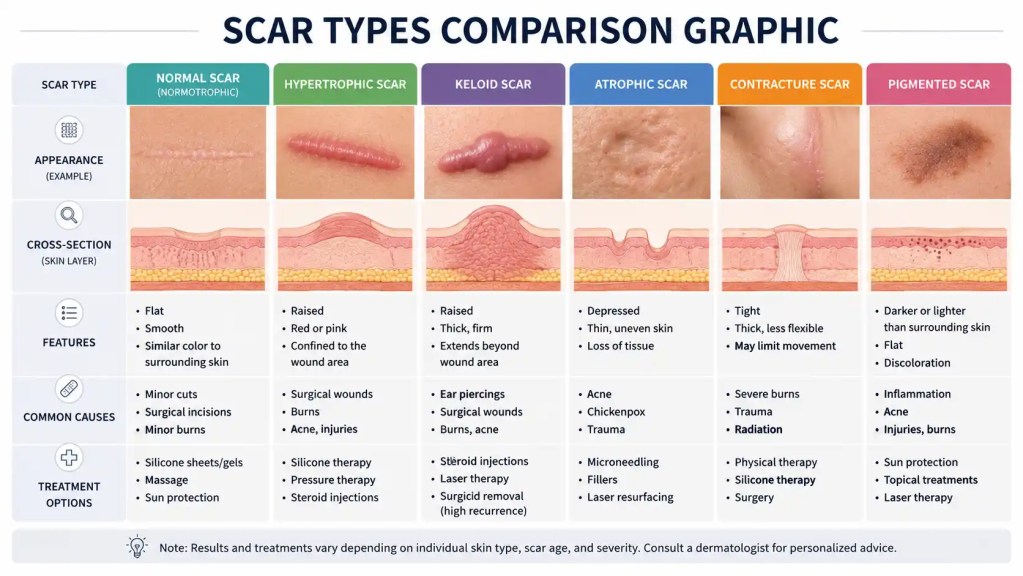
In the field of cosmetology, deep acne marks are called atrophic scars. This means your body tried to heal a wound but could not make enough skin tissue. To find your exact pattern, look at the shapes below.
Icepick Scars: Deep and Pointy Pits
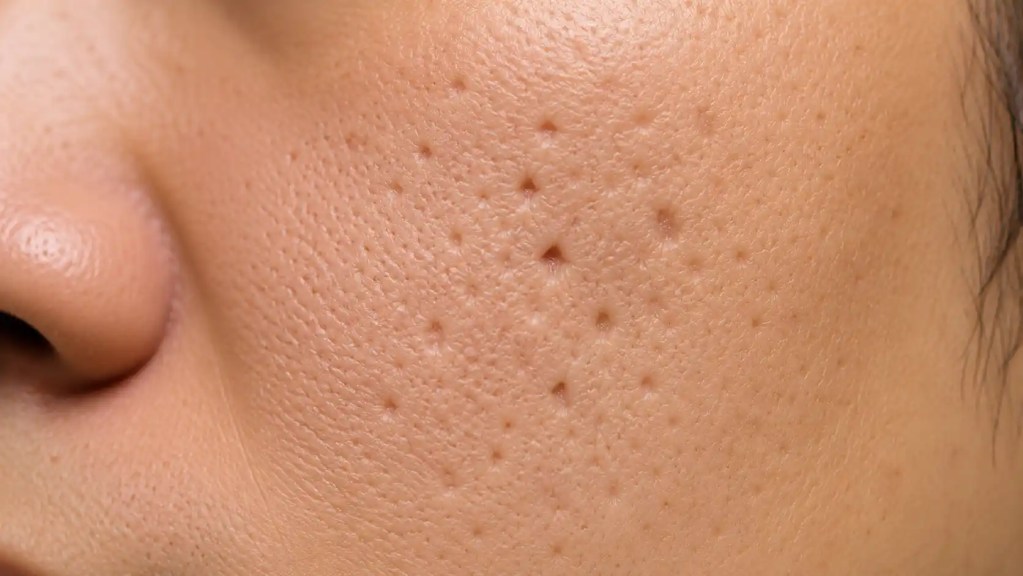
First, let us look at icepick scars. Think of a very thin needle punched straight into your cheek. That is exactly how they look. Specifically, these are narrow, V-shaped pits. They are less than 2 mm wide. But they go very deep into your lower skin layers. Because they are so deep, simple surface scrubs completely miss the base. Thus, normal skin peeling cannot fix them.
Boxcar Scars: Craters with Sharp Walls
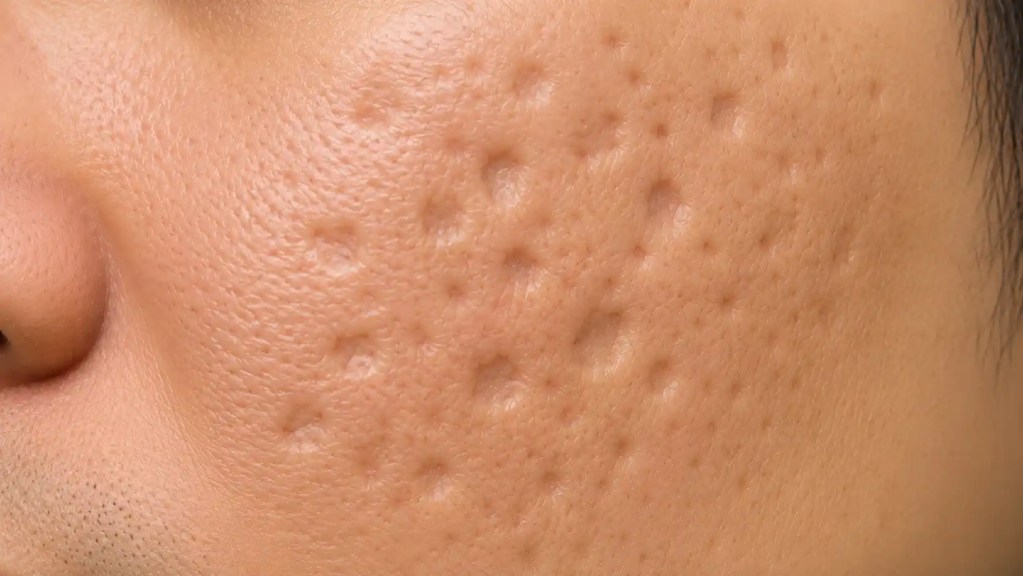
Next are boxcar scars. These look like round or square holes with steep, vertical sides. They are wider than icepick scars. Usually, they measure between 1.5 mm and 4 mm across. They have a flat bottom. These scars happen when severe acne destroys a large patch of skin tissue. As a result, they leave a sharp edge. This steep edge catches heavy shadows under indoor lights.
Rolling Scars: Wavy and Uneven Skin

Finally, we have rolling scars. Unlike the other types, these marks do not have sharp edges. Instead, they look like broad, smooth waves on your cheeks. They are often 4 mm to 5 mm wide. They give your face an uneven, bumpy texture. This happens because tight, fibrous bands grow under your skin surface. These bands act like tight ropes. They pull your outer skin layer downward.
Clinical Treatments Decoded: The Real Fix for Each Scar
Every scar type has a different shape. Therefore, one single machine cannot fix all of them. Instead, expert doctors use specific tools to rebuild your skin from different depths.
| Scar Type | Main Clinic Fix | Bonus / Combined Option | Average Sessions Needed |
| Icepick Scars | TCA CROSS (Deep Acid Drop) | Punch Excision (Minor Surgery) | 3 to 5 visits |
| Boxcar Scars | Fractional CO2 Laser Resurfacing | Microneedling Radiofrequency (MNRF) | 4 to 6 visits |
| Rolling Scars | Subcision (Cutting internal bands) | PRF / Skin Fillers | 3 to 5 visits |
1. The Fix for Icepick Scars: TCA CROSS
Icepick scars are very narrow but go deep. So, using a big laser on the whole face does not make sense. Instead, doctors use a method called TCA CROSS.
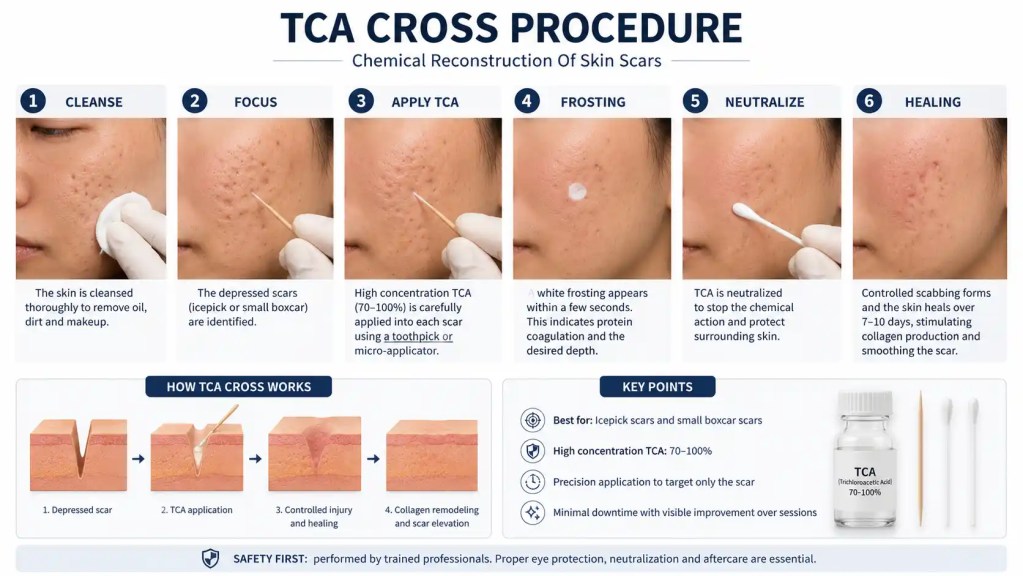
During this fix, the doctor takes a tiny tool. They place a high dose of strong acid directly inside the deep pit. This acid creates a small white frost inside the scar. Consequently, this safe trauma tells your body to heal the area. Over a few weeks, new skin grows from the bottom of the pit upward. Thus, the deep hole slowly fills up to match your normal skin.
2. The Solution for Boxcar Scars: Lasers and MNRF
To fix the sharp edges of boxcar scars, the skin surface must be planed down. Doctors use Fractional CO2 Lasers or MNRF for this job.

- Fractional CO2 Lasers: This machine shoots tiny laser beams into your skin. It vaporizes the hard scar tissue safely. But it leaves small gaps of healthy skin untouched. This helps the skin heal very fast. As a result, the steep edges of the crater soften and flatten out.
- MNRF: However, pure laser heat can sometimes cause dark marks on darker Indian skin tones. So, MNRF is a safer option. This device uses gold-plated needles to enter your skin safely. Then, it releases gentle radio energy deep inside the dermis. This makes new collagen grow without burning the top skin layer.

3. The Treatment for Rolling Scars: Subcision and PRF
Rolling scars are held down by tight strings under the skin. Therefore, surface skin care will never work. You must cut those internal strings. Doctors do this with a procedure called Subcision.
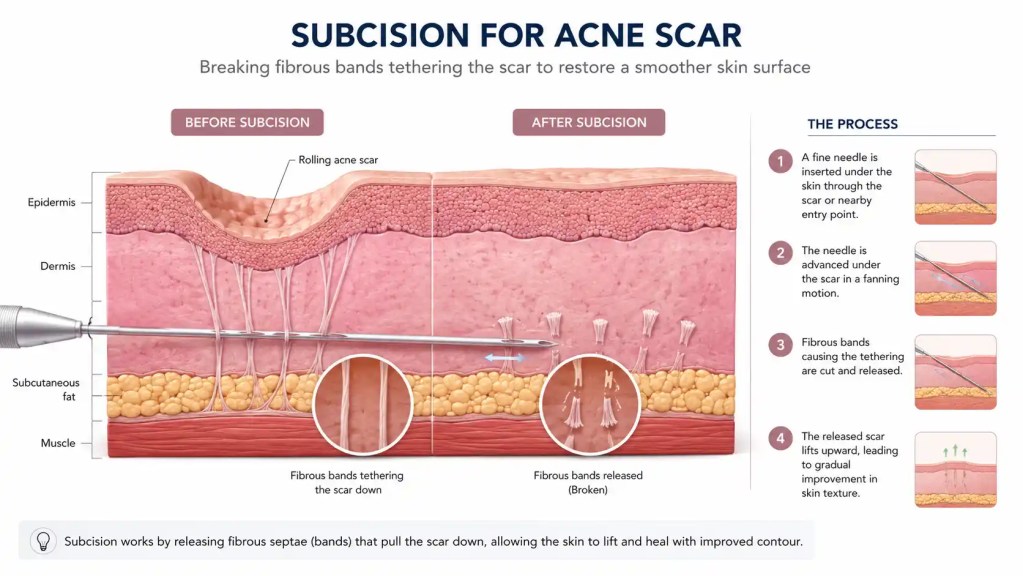
First, the doctor numbs your skin. Next, they slide a tiny needle horizontally under the scar. The doctor moves the needle back and forth to cut the tight bands. The moment the bands snap, your skin lifts up instantly. Then, the doctor often injects Platelet-Rich Fibrin (PRF) into that empty space. PRF uses your own blood cells to release natural growth factors. Thus, it stops the bands from growing back and helps new tissue form quickly.

Where to Find Expert Acne Scar Clinics in Chennai
Fixing deep scars requires a lot of medical skill. You need a certified doctor who understands Indian skin types and safe laser levels. If you are looking for top centers near Nungambakkam, Chetpet, or Egmore, consider these trusted options:
- Maynee Skin, Hair & Slimming Clinic (Nungambakkam): Located right in the center of Nungambakkam, this clinic is great for mixed scar cases. Their experts combine subcision with advanced PRF to fight the deep skin damage caused by hard water. Also, they adjust laser settings safely. This completely protects dark skin from getting marks.
- Oliva Skin & Hair Clinic: This is a famous medical skin chain with clinics across Chennai. They are well known for using safe, approved laser machines and clear check-up steps.
- Render Skin & Hair (Egmore): This premium center is located very close to Nungambakkam. They are popular for their scientific approach to fixing bad skin textures.
- Kosmoderma Skin, Hair & Body Clinics (Chetpet): Situated in nearby Chetpet, this center offers good MNRF treatments and skin peels made for city skin issues.
Safe Recovery Rules for Chennai’s Hot Climate
Getting the treatment is only half the work. The other half depends on how you care for your skin at home. Healing your skin in a hot, humid city requires clear rules.
- Stop Using Heavy Creams: Your skin needs moisture after a clinic visit. But thick, greasy creams trap sweat and body heat. This can cause new pimples. Instead, use light ceramide gels or water-based hyaluronic acid.
- Avoid Heavy Sweating: Try to rest indoors after your session. Avoid long travel in the hot sun. Because heavy sweat on open skin causes bad irritation. It can also lead to fungal infections.
- Use Soft RO Water: For the first 7 days, do not wash your face with hard tap water. Instead, use clean bottled water or RO water to rinse. This keeps harsh minerals away from your open skin barrier.
- Apply Pure Sunscreen Daily: Never skip this step. Use a mineral sunscreen with SPF 50 every single day. Put it on even if you stay indoors near glass windows.
Remember, patience is key. Building new skin collagen takes time. So, you will see real changes by the second month. By picking the right clinic fix for your exact scar type, you can get smooth skin and feel confident again.-j44
Frequently Asked Questions
No, over-the-counter skin creams, serums, and home remedies cannot permanently remove deep atrophic or pitted acne scars. These topical products are designed to fade surface-level pigmentation and slightly smooth out minor, superficial skin texture
he most effective clinical treatment for narrow, deep icepick scars is TCA CROSS (Chemical Reconstruction of Skin Scars).
In Chennai, professional acne scar removal treatments generally range from ₹3,000 to ₹15,000 per session, depending heavily on the technology used, the size of the target area, and the severity of the scarring.
Yes, modern laser and energy-based scar treatments are entirely safe for Indian skin tones when performed by an experienced dermatologist using precisely calibrated, skin-specific settings.
Most individuals require between 3 to 6 clinical sessions, spaced roughly 4 to 6 weeks apart, to experience significant structural improvement in their acne scars.
Subcision is highly tolerable because specialized clinics apply a potent topical numbing gel or inject a local anesthesia to completely numb the area beforehand. The visible recovery downtime typically lasts between 3 to 7 days.
Standard microneedling relies solely on mechanical needles to puncture the skin, whereas MNRF (Microneedling Radiofrequency) combines those physical punctures with targeted bursts of radiofrequency heat delivered deep within the dermis.
Yes, washing your face with Chennai’s groundwater or hard borewell water can severely irritate your skin and delay the healing process immediately following a clinical treatment.
Yes, it is highly critical to bring active acne breakouts completely under control before undergoing structural acne scar treatments.
Yes, the structural skin improvements achieved from treatments like lasers, MNRF, TCA CROSS, and subcision are permanent because your body builds brand-new, long-lasting collagen tissue.