Do you struggle with unwanted facial hair? If so, finding the right PCOS hirsutism treatment becomes essential. You are not alone, because thousands of Indian women face this concern every day. In most cases, this condition is called hirsutism, and it commonly appears in women with PCOS.
However, there is encouraging news. Today, effective PCOS hirsutism treatment options are widely available. First, you need to understand what is happening inside your body. Then, you can choose solutions that actually work.
Let’s break it down step by step.
Understanding PCOS Hirsutism: What Causes Facial Hair?
To begin with, your body responds strongly to hormonal signals. When you have PCOS, your ovaries produce excess male hormones known as androgens. Although all women naturally have these hormones, women with PCOS typically have higher levels.
As a result, dormant hair follicles become active. Consequently, thicker and darker facial hair begins to appear.
The Hormone Connection
Understanding this process is important because it guides your PCOS hirsutism treatment choices.
First, testosterone levels increase.
Because of PCOS, the ovaries produce more testosterone than normal.
Next, insulin resistance contributes.
In many women, high insulin levels signal the ovaries to release even more androgens. Therefore, the cycle continues.
Finally, hair follicles become highly sensitive.
Once androgens convert into DHT, hair growth becomes faster and coarser.
For this reason, effective treatment usually targets both hormones and hair follicles.
Should You Do Hormone Tests Before Treatment?
Before starting any PCOS hirsutism treatment, testing is strongly recommended. Without proper testing, treatment may not be fully effective.
Typically, doctors suggest checking:
- Total and free testosterone
- DHEA-S
- LH and FSH ratio
- Blood sugar levels
- Thyroid profile
Through these tests, doctors confirm whether PCOS is the true cause. In addition, they rule out thyroid or adrenal disorders.
Across India, hormone testing is now easily accessible. Generally, the cost ranges between ₹2,000 and ₹5,000, depending on the panel.
Medical PCOS Hirsutism Treatments That Work
Although there is no instant cure, several medical options work reliably. When used correctly, they significantly reduce unwanted hair growth.
Birth Control Pills
In most cases, doctors prescribe oral contraceptives first. Primarily, they help by:
- Lowering androgen production
- Increasing SHBG levels
- Regulating menstrual cycles
Over time — usually within 6 to 12 months — hair growth often becomes slower and finer.
Spironolactone for Hirsutism
Meanwhile, spironolactone works directly at the hair follicle. Essentially, it blocks androgen receptors so male hormones cannot stimulate hair growth.
Possible side effects include:
- Irregular periods
- Breast tenderness
- Mild dizziness
- Increased urination
- Raised potassium (requires monitoring)
Therefore, regular blood tests are important. Additionally, this medicine must be avoided during pregnancy.
Typical dose: 50–200 mg daily
Visible improvement: after about 6 months.
Metformin
On the other hand, metformin targets insulin resistance. As insulin levels improve, androgen production may gradually decrease.
However, it is important to understand one limitation. Metformin does not remove existing hair, but it can slow future growth.
Laser Hair Removal: Advanced PCOS Hirsutism Treatment in India (2026)
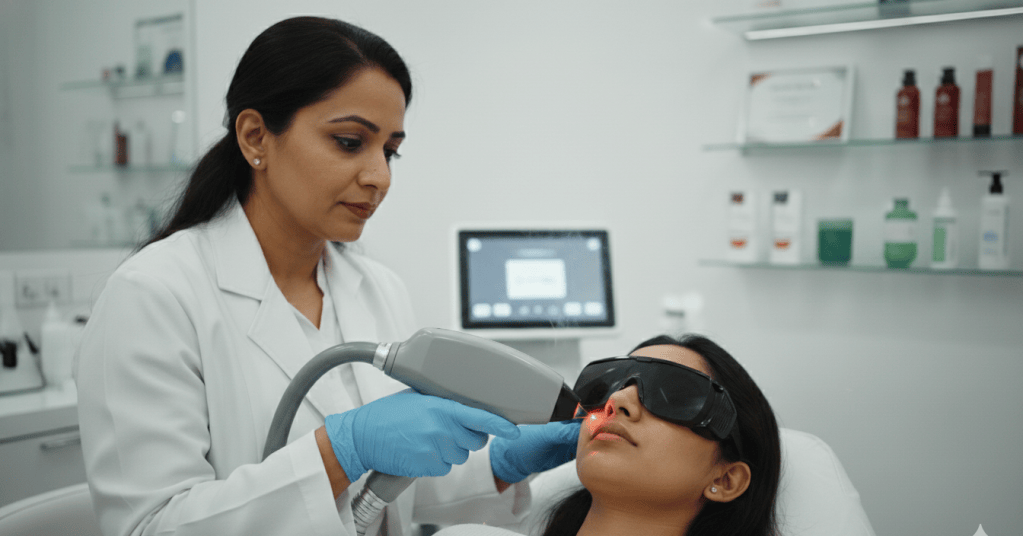
For long-term reduction, laser hair removal remains one of the most effective solutions. In fact, many dermatologists consider it a cornerstone treatment for PCOS-related facial hair.
How Laser Works
Simply put, the laser targets pigment in the hair follicle. Then, heat damages the follicle, which reduces future growth.
However, PCOS patients usually require more sessions. Because hormones can activate new follicles, maintenance is essential.
What to Expect in 2026
Typically:
- Initial plan: 8–12 sessions
- Maintenance: every 6–12 months
- Best results when combined with medical therapy
- Cost in India: ₹1,500–₹5,000 per session
Over time, most patients experience 70–90% hair reduction.
In Chennai, many clinics now customize protocols specifically for hormonal hair growth. For instance, Maynee Cosmetology Clinic, Nungambakkam often highlights the importance of tailored laser plans for PCOS-related hirsutism.
Natural Support for PCOS Hirsutism

While medical treatment remains primary, lifestyle changes can enhance results. Therefore, combining both approaches often works best.
Spearmint Tea
Research suggests spearmint may help reduce androgen levels. For best results, drink two cups daily for at least three months.
Inositol Supplements
Similarly, myo-inositol and D-chiro-inositol improve insulin sensitivity.
Recommended range: 2–4 grams daily
Over time, many women notice improved cycle regularity.
Anti-Inflammatory Diet
Because chronic inflammation worsens PCOS, diet plays a supportive role. Therefore, focus on:
- Whole grains instead of refined flour
- Plenty of vegetables
- Omega-3-rich foods
- Reduced sugar intake
Although results are gradual, consistency makes a difference.
Regular Exercise
Likewise, physical activity improves insulin function.
Minimum goal:
- 30 minutes brisk walking daily
- Strength training twice weekly
Stress Management
Since high cortisol worsens hormonal imbalance, stress control is essential. Helpful methods include yoga, deep breathing, proper sleep, and relaxing hobbies.
Traditional Home Remedies (Supportive Only)
Some women also try turmeric paste, papaya masks, or sugar-lemon scrubs. However, these methods mainly help with fine hair and do not remove thick hormonal hair.
Building Your Personal Treatment Plan
Because every PCOS case is different, your PCOS hirsutism treatment must be personalized.
Step-by-step approach:
- First, complete hormone testing
- Next, consult a gynecologist or endocrinologist
- Then, consider laser hair reduction
- Meanwhile, improve lifestyle habits
- Finally, stay consistent for 6–12 months
Patience is key, since hormonal balance takes time.
Final Thoughts
Overall, PCOS hirsutism is common and manageable. With the right combination of medical care, laser treatment, and lifestyle support, unwanted hair can be significantly reduced.
Today, treatment options in India are more advanced and accessible than ever. Therefore, with consistency and the right guidance, better skin confidence is absolutely achievable.
FAQ
PCOS facial hair cannot be permanently cured because the hormonal trigger may continue. However, with proper PCOS hirsutism treatment, especially laser hair removal combined with hormonal control hair growth can be significantly reduced long term.
Typically, women with PCOS need 8–12 laser sessions initially. After that, maintenance sessions every 6–12 months are usually required because hormonal activity can activate new hair follicles.
Ideally, you should consult a gynecologist or endocrinologist for hormonal management. Additionally, a qualified dermatologist or laser specialist can help with hair reduction treatments.
Metformin mainly improves insulin resistance. As a result, it may slow new hair growth over time. However, it does not remove existing facial hair, so it is often combined with other treatments.
Natural remedies like spearmint tea, inositol, and lifestyle changes can support hormonal balance. However, they usually work best as supportive measures and may not remove thick hormonal hair on their own.
Most women begin noticing improvement within 3–6 months. However, significant and stable results usually take 6–12 months with consistent treatment.