
Professional
Acne Peel —
Clear, Scar-Free Skin
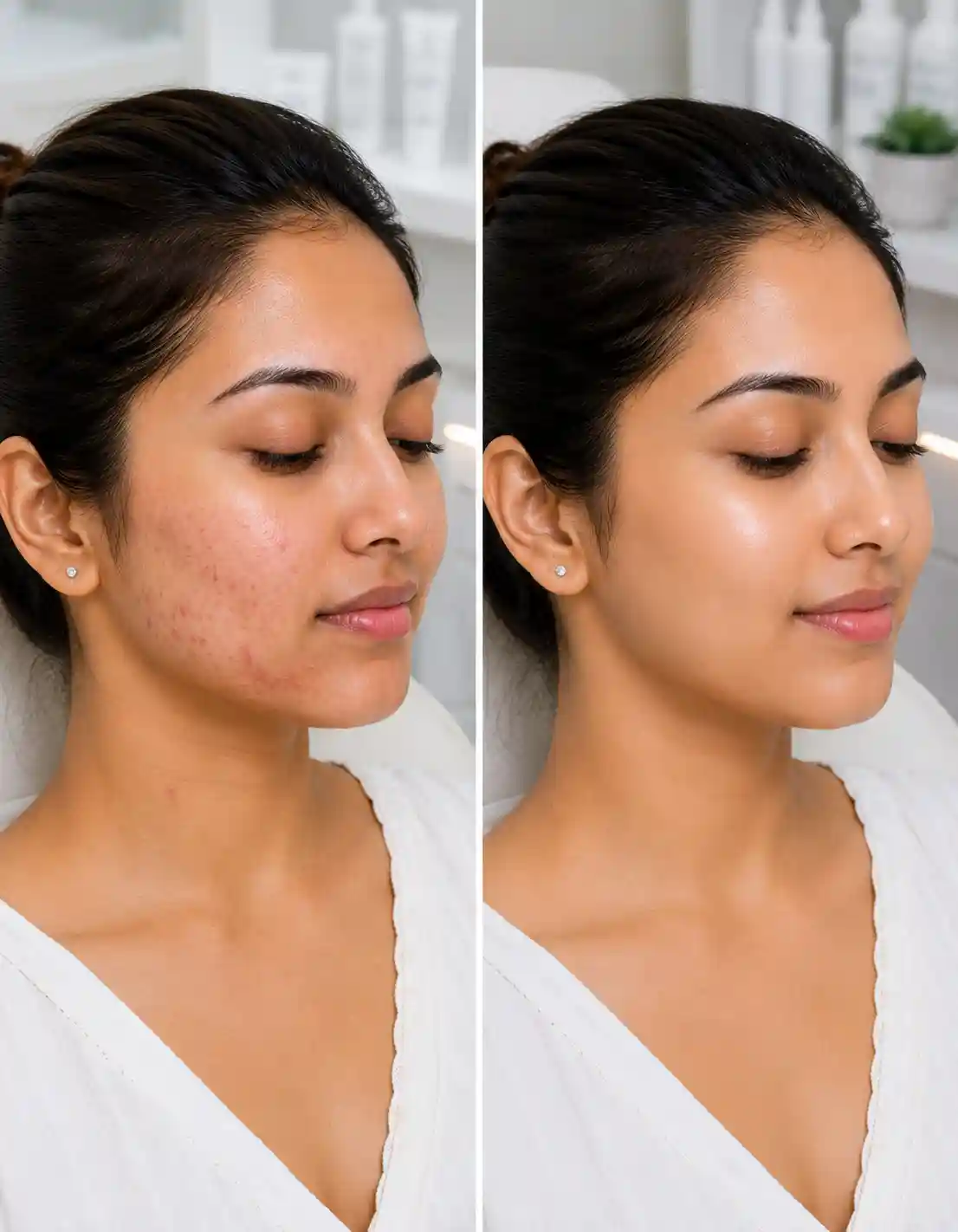
Chennai's certified dermatologist-supervised Acne Peel — a clinically proven chemical exfoliation treatment that targets active acne, breakouts, blackheads, pimple marks, acne scars, open pores and oily congested skin. Precisely calibrated formulations for the Indian climate and all Indian skin tones. Visible results from the first session.
A Clinical Peel
Built for Acne-Prone Skin
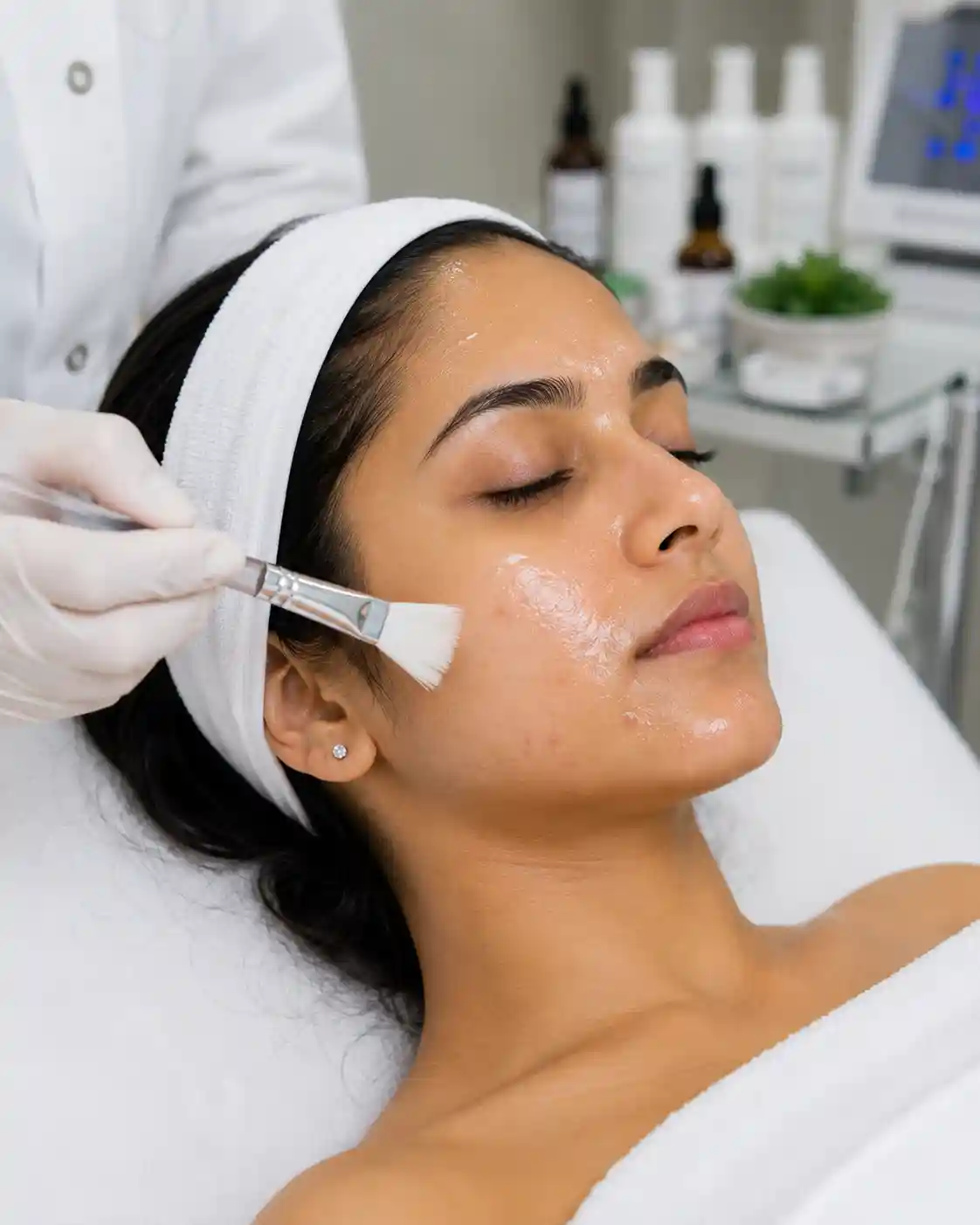
An Acne Peel is a professional clinical dermatology treatment that applies specifically selected chemical acids — such as salicylic acid, glycolic acid, mandelic acid or Jessner's solution — to the skin to deeply exfoliate pores, suppress acne-causing bacteria, regulate sebum production, clear existing breakouts and progressively fade acne marks, scars and post-inflammatory hyperpigmentation.
Acne is one of the most prevalent skin conditions affecting people in Chennai — driven by the city's high heat and humidity, UV exposure, pollution, hormonal fluctuations and high-glycaemic diets. When the hair follicle becomes blocked with excess sebum and dead skin cells, it creates the ideal environment for Cutibacterium acnes bacteria to proliferate — triggering the inflammatory cascade that produces papules, pustules, nodules and cysts. When improperly managed or simply left to run its course, active acne leaves behind post-inflammatory hyperpigmentation (dark marks), depressed scars and enlarged pores that persist long after the acne itself has cleared — and which no amount of topical creams or home remedies can adequately reverse once established in the deeper skin layers.
At Maynee, the Acne Peel is a fully dermatologist-prescribed and supervised procedure. Rather than applying a generic standard peel, your dermatologist selects the most clinically appropriate acid — or combination of acids — based on your acne grade, skin type, tone, presence of active inflammation and scarring depth. This precision-tailored approach delivers safe, progressive, cumulative improvement in both active acne clearance and scar reduction across a structured session course — with no surgery, no injections and minimal downtime.
How the Acne Peel Works — The Science
Acne Conditions the
Acne Peel Addresses
Our dermatologist-calibrated Acne Peel targets every stage of the acne cycle — from active breakouts to long-standing scars — with a precision protocol matched to your skin's specific presentation.
Active Acne & Breakouts
Inflammatory papules, pustules, blackheads, whiteheads and closed comedones — salicylic acid peels clear active lesions, unclog pores and suppress the bacterial and inflammatory triggers that sustain recurring breakouts.
Post-Acne Marks & PIH
The dark brown or reddish spots left after a pimple heals — post-inflammatory hyperpigmentation — are among the most persistent acne aftereffects on Indian skin. Glycolic and mandelic peels target melanin accumulation and progressively clear these marks.
Acne Scars & Textural Damage
Rolling, boxcar and early shallow atrophic scars respond progressively to serial glycolic, TCA or Jessner's peels — which stimulate collagen remodelling and dermal volume restoration, gradually filling and resurfacing pitted or uneven skin texture.
Hormonal Acne
Deep, tender, cystic breakouts along the jawline, chin and lower face driven by hormonal fluctuations — common in adults with PCOS or menstrual-cycle-linked acne — are managed with targeted mandelic or salicylic peels, combined with dermatologist-prescribed topical or hormonal co-management.
Back & Body Acne
Bacne (back acne), chest acne and shoulder breakouts driven by heat, friction and humidity — particularly prevalent in Chennai's climate — respond well to salicylic or glycolic body peels, clearing congestion, reducing post-acne marks and improving skin texture in these larger areas.
Oily Skin & Enlarged Pores
Excess sebum production and chronically enlarged, clogged pores are the root substrate for recurring acne. Serial acne peels — particularly salicylic — regulate sebaceous gland activity, remove follicular debris and progressively reduce pore visibility as skin texture normalises.
Six Ways an Acne Peel
Transforms Acne-Prone Skin
A professional acne peel works on multiple pathways simultaneously — clearing active breakouts, preventing new ones, fading marks and rebuilding skin structure in ways that daily skincare and OTC anti-acne products simply cannot replicate.
Clears Active Acne & Reduces Breakout Frequency
Salicylic acid — the gold-standard acne peel acid — is oil-soluble and penetrates deep into sebaceous follicles to dissolve the sebum-and-dead-cell plugs that form comedones and trigger inflammatory acne. Its additional keratolytic, anti-inflammatory and bacteriostatic properties reduce Cutibacterium acnes load, suppress the inflammatory cascade driving active lesions and progressively reduce the frequency and severity of new breakouts across a peel course. Unlike topical antibiotics or benzoyl peroxide — which require daily application to maintain effect — the cumulative follicular remodelling from serial peels delivers a more durable, progressive reduction in breakout cycle frequency, giving the skin an extended window to clear and heal between episodes.
Fades Post-Acne Marks & Hyperpigmentation
Post-inflammatory hyperpigmentation — the dark brown or greyish marks that persist on Indian skin for months after every pimple heals — is one of the most psychologically distressing aftereffects of acne, and one of the hardest to treat with topical products alone. Glycolic acid peels accelerate epidermal turnover, progressively removing pigmented surface cells while inhibiting tyrosinase-driven melanin overproduction. Mandelic acid peels offer gentler, PIH-safe depigmentation specifically suited to deeper Indian skin tones. Over a course of 4–6 sessions, the cumulative clearing of post-acne pigmentation delivers a significantly more even, clearer skin tone — reducing the need for concealer and the psychological burden of persistent marking.
Resurfaces Acne Scars & Improves Skin Texture
For shallow rolling and boxcar acne scars — the most common scar types on the cheeks and jaw in Indian skin — serial glycolic acid, mandelic acid or Jessner's solution peels stimulate fibroblast activity to produce new collagen and elastin in the scarred dermal tissue. This progressive collagen remodelling gradually fills the base of the scar from below, reduces its depth and improves the surrounding skin texture, producing a visibly smoother skin surface over a structured peel course. For moderate-depth scars, your dermatologist may recommend combining the peel course with microneedling RF or fractional laser for enhanced dermal remodelling depth — maximising structural improvement outcomes.
Minimises Pore Size & Controls Oiliness
Enlarged visible pores and chronically oily, congested skin are the defining characteristics of acne-prone skin — and the ongoing reason many patients continue to break out even when active lesions have cleared. The deep follicular exfoliation from salicylic acid peels removes the sebum, debris and keratinous material packed into enlarged pores — physically reducing their appearance as the follicular walls contract once the congestion is cleared. Serial peel treatment progressively normalises sebaceous gland activity, reducing the rate of sebum production and sebaceous filament re-accumulation between sessions — delivering a genuinely less oily, less pore-prominent complexion that is more resistant to future clogging and congestion-driven breakouts.
Stimulates Collagen & Restores Skin Density
Beyond acne clearance, the controlled exfoliation of each acne peel session initiates the skin's wound-response collagen cascade in the dermis — activating fibroblasts to synthesise new collagen and elastin fibres that progressively improve overall skin density, firmness and elasticity in acne-damaged skin. This structural rebuilding is particularly valuable for clients whose skin has been weakened and thinned by years of chronic acne and repeated inflammation cycles — restoring a more resilient, plumper and visibly healthier-looking skin structure that continues to improve in the weeks between each session as collagen maturation progresses.
Brightens Overall Complexion & Skin Radiance
Chronic acne leaves the skin looking dull, uneven and fatigued — not just from the scars and pigmentation but from the cumulative effect of repeated inflammation, excess sebum, poor skin cell turnover and UV-triggered oxidative stress. A complete acne peel course delivers comprehensive skin renewal — clearing surface dead skin cells, fading residual discolouration, improving skin tone uniformity and restoring the natural skin radiance that active acne consistently suppresses. Clients regularly report that their overall complexion looks dramatically healthier, brighter and more even-toned by the end of their peel course — a natural-looking improvement that reads as simply healthy skin, not a treated appearance.
Acne Peel
Procedure Video
Watch our certified dermatologist explain and perform a complete Acne Peel session — from skin assessment and acid selection through precise application, neutralisation and post-treatment care — so you know exactly what to expect at every step of your appointment.

Your Acne Peel Session —
Step by Step
At Maynee, every Acne Peel is a dermatologist-designed, clinically structured procedure — precisely calibrated to your acne type, skin tone and treatment goals. Here is exactly what to expect.
Dermatologist Assessment & Acne Classification
Your certified dermatologist begins with a comprehensive skin assessment — evaluating your acne grade (comedonal, mild, moderate or severe inflammatory), distribution (face, back, chest), presence and depth of acne scars, post-inflammatory pigmentation severity, skin tone (Fitzpatrick type), sebaceous activity, pore size and overall skin sensitivity. Your complete medical history is reviewed including current topical and oral acne medications, past isotretinoin use, known acid sensitivities, hormonal conditions (PCOS, thyroid), contraceptive medications and any recent cosmetic procedures. Based on this assessment, the most appropriate acid formulation, concentration and peel depth is selected — and a personalised session course with realistic outcome expectations is outlined.
Cleansing, Degreasing & Skin Preparation
The treatment area is thoroughly cleansed with a dermatologist-prescribed pH-balanced cleanser to remove all makeup, sunscreen, sebum, moisturisers and surface impurities. A brief degreasing step using acetone or isopropyl alcohol solution follows — a critical preparation step that removes excess surface oils and ensures completely even acid penetration across all pore openings. Uneven degreasing is a leading cause of patchy peel results. Standardised clinical baseline photography is taken under consistent lighting at each session for objective progress documentation and before-and-after comparison throughout the course.
Specialist Acne Peel Acid Application
Using a gauze applicator, fan brush or precision instrument depending on the formulation, the dermatologist applies the selected acid — most commonly 20–30% salicylic acid for active acne, 30–50% glycolic acid for scar resurfacing, mandelic acid or Jessner's solution (resorcinol, salicylic, lactic acid combination) for mixed presentations — to the entire treatment area in precise, even strokes. The acid is left on the skin for a closely monitored application time determined by your skin's response — typically 2–5 minutes for salicylic self-neutralising peels or a timed period for glycolic peels requiring manual neutralisation. Your dermatologist observes the skin for frosting, erythema grade and sensitivity response throughout.
Neutralisation & Post-Peel Soothing Application
At the clinically determined endpoint, the acid is neutralised — either self-neutralising (salicylic) or actively neutralised with sodium bicarbonate solution — completely stopping the exfoliation process and restoring the skin's normal pH balance. A prescribed post-peel soothing complex is then applied — typically containing hyaluronic acid, ceramides, niacinamide and antioxidant actives — to hydrate, calm post-peel warmth and begin the skin's barrier recovery process. A broad-spectrum SPF is applied as the final step. Your dermatologist provides a full written post-treatment care protocol and specifies the timeline for resuming all topical actives, retinoids and makeup — tailored to your peel depth and skin response.
Structured Course, Progress Review & Protocol Adjustment
Most clients complete 4–6 Acne Peel sessions spaced 2–3 weeks apart. Each session delivers progressive, cumulative acne clearance, scar resurfacing and skin quality improvement. Clinical progress photography at every session provides an objective visual record of improvement from baseline to end of course. The acid formulation or concentration may be adjusted by your dermatologist at each follow-up review based on your skin's response — increasing depth as tolerance improves for enhanced scar resurfacing results, or temporarily stepping down for overly sensitive skin. A maintenance protocol of 1–2 peel sessions every 2–3 months is recommended for sustained long-term clearance, particularly for clients with hormonal or climate-driven recurring acne.
Before & After Your Acne Peel — Essential Instructions
Before treatment: Arrive with clean, product-free skin — no makeup, sunscreen, moisturiser or active serums. Stop all retinoid-based serums or creams (tretinoin, adapalene, retinol) 5–7 days before each session. Stop topical antibiotics (clindamycin, erythromycin) 24 hours prior or as specifically advised by your dermatologist. Inform your dermatologist of all current acne medications — especially isotretinoin history (minimum 6-month clearance required before any peel). Do not exfoliate, scrub or use AHA/BHA home products in the 5 days before a session. Avoid sunburned skin — reschedule if you have had recent significant UV exposure. Do not wax or thread the face within 72 hours of a peel.
After treatment (essential): Apply only the prescribed post-peel moisturiser and SPF 50 for the first 48–72 hours — no actives, retinoids, AHAs, BHAs or vitamin C serums until cleared by your dermatologist. Mild redness, warmth and visible flaking or peeling over 3–5 days is completely normal — do not pick, pull or peel the skin manually, which risks scarring and PIH. Apply SPF 50 broad-spectrum sunscreen every morning without fail throughout the entire treatment course — UV re-exposure without SPF is the primary cause of post-peel hyperpigmentation on Indian skin. Avoid swimming pools, saunas and heavy exercise that induces sweating for 48 hours. Sleep on a clean pillowcase. If you notice unusual blistering, swelling or severe irritation, contact the clinic immediately.
The Benefits of a Professional
Acne Peel at Maynee
A dermatologist-supervised Acne Peel at Maynee delivers safe, progressive and measurable acne clearance — with clinically calibrated formulations, documented progress and specialist care for Indian skin.
Treats Active Acne & Prevents Recurrence
Salicylic acid peels clear active lesions, deeply unclog pores, reduce bacterial load and suppress the inflammatory triggers that drive recurring breakouts — delivering progressive reduction in breakout frequency that maintains between sessions.
Minimal Downtime — Return Same Day
Acne peels at Maynee require minimal downtime. Mild redness and warmth settle within a few hours. Mild flaking over 3–5 days is manageable and normal. You can resume work the same day — only avoiding heavy makeup for 48–72 hours.
Safe for All Indian Skin Tones
With correctly calibrated mild acids (salicylic or mandelic for darker skin), acne peels are safe for all Indian skin tones including Fitzpatrick types III–V at Maynee — with specific formulation adjustments to minimise the PIH risk inherent to deeper Indian complexions.
Fades Dark Marks & Acne PIH
Post-acne pigmentation — the stubborn dark spots that persist months after breakouts on Indian skin — responds well to glycolic and mandelic acid peels, which accelerate cell turnover and inhibit melanin production to progressively clear the dark marking left by every resolved pimple.
Resurfacing for Acne Scars
Serial glycolic, Jessner's or TCA peels stimulate progressive collagen remodelling in shallow-to-moderate acne scars — gradually improving scar depth, filling boxcar indentations and smoothing the uneven texture that acne-damaged skin develops over years of repeated breakout cycles.
Treats Face, Back & Chest
Acne peel treatment at Maynee is available for the face, back, chest and shoulders — addressing all common acne-affected areas with dermatologist-calibrated protocols for each body region. Body acne responds particularly well to salicylic acid peel treatment.
Dermatologist-Supervised Every Step
At Maynee, every acne peel session is prescribed, applied and monitored by a certified dermatologist — not a therapist or technician. Dermatologist oversight ensures the correct formulation is used for your skin state on the day of each session, and allows immediate adjustment if needed.
Progress Documented at Every Session
Clinical progress photography at every session provides you with an objective, side-by-side visual comparison of your skin from your first appointment to the end of your treatment course — making cumulative improvement visible and tangible, even when day-to-day changes feel gradual.
Is an Acne Peel
Right for You?
An Acne Peel is suitable for most adults experiencing active acne, breakouts, acne marks, acne scars, oily skin or enlarged pores — across all Indian skin tones. A dermatologist consultation confirms suitability and designs your personalised plan.
Ideal Candidates for an Acne Peel
-
Active Acne — Mild to Moderate
Adults with recurring papules, pustules, blackheads or whiteheads on the face, back or chest for whom topical creams and cleansers have not delivered adequate or lasting clearance — including both teenage and adult-onset acne patterns.
-
Post-Acne Marks & Dark Spots
Individuals with persistent post-inflammatory hyperpigmentation — brown, reddish or greyish spots — remaining months after breakouts have cleared, for whom brightening serums and creams have not produced adequate lightening or speed of clearance.
-
Shallow to Moderate Acne Scars
Clients with rolling scars, boxcar scars, shallow icepick scars or general post-acne textural irregularity who are seeking a non-surgical professional treatment to progressively improve skin surface evenness and scar depth.
-
Oily Skin, Open Pores & Congestion
Those with chronically oily, congested skin, persistent sebaceous filaments and visibly enlarged pores who want a clinical treatment to deeply decongest the follicular system and reduce the ongoing sebum excess that perpetuates the acne-prone skin environment.
-
Hormonal or Adult Acne
Adults — particularly women — experiencing hormonal breakouts along the jawline, chin or lower face linked to menstrual cycles, PCOS or hormonal transitions, for whom standard topical acne treatments provide incomplete or inconsistent control.
When an Acne Peel May Not Be Suitable
Your dermatologist will assess each of these at your consultation:
- Current isotretinoin (Accutane/Oratane) use — must complete the course and wait a minimum of 6 months before any chemical peel, without exception
- Active, widespread cystic or nodular acne — systemic treatment may be required concurrently; your dermatologist will advise the combined approach
- Active herpes simplex (cold sore) outbreak — antiviral prophylaxis prescribed before any peel
- Active eczema, psoriasis or rosacea in the treatment area — requires dermatologist clearance before proceeding
- Pregnancy or breastfeeding — certain acid formulations are contraindicated; consult your dermatologist for safe alternatives
- Known hypersensitivity to salicylic acid, glycolic acid, mandelic acid or aspirin derivatives
- Recent sunburn or significantly UV-compromised skin in the treatment area — reschedule after recovery
- Very deep icepick acne scars — laser or punch excision may be more appropriate; dermatologist will advise combined protocol
- Inability to follow daily SPF 50 use post-treatment — UV re-exposure is the primary cause of PIH on Indian skin post-peel
Not Sure Which Acne Treatment Is Right for You?
Acne has multiple root causes — hormonal, microbial, genetic, dietary and environmental. The correct treatment depends on your acne type, grade and skin tone. Our dermatologists provide a thorough assessment and build a personalised protocol — whether that's an acne peel alone or a combination approach with medical therapy, laser or microneedling.
Book Skin Assessment
Real Results,
Real Voices
Hear from clients whose active acne, pimple marks and acne scars have been professionally treated with the Acne Peel at Maynee — in their own words.
"I had been dealing with breakouts and dark marks for years and nothing worked permanently. After completing five acne peel sessions at Maynee, my skin is genuinely the clearest it has ever been — the dark spots are almost completely gone and I barely break out anymore. The dermatologist assessed my exact acne type and explained everything clearly. I only wish I had done this sooner."
"I had severe back acne which was affecting my confidence at the gym. Four sessions of the acne peel on my back at Maynee have made a massive difference — the active acne cleared after the second session and the dark marks from old breakouts are significantly lighter. The treatment was completely comfortable and the skin was only mildly red for about a day."
"The acne peel at Maynee targeted both my active pimples and the scars from old breakouts in the same treatment course. After six sessions I am not exaggerating when I say my skin texture is completely transformed — the pitted scars on my cheeks are noticeably shallower and my skin tone is so much more even. The dermatologist was incredibly thorough and followed my progress at every session."
Acne Peel
Before & After
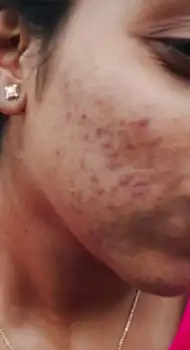
Real results from clients who completed an Acne Peel course at Maynee. Clinical photography — no filters, no editing.
 Before
 After
After
 Before
 After
After
 Before
 After
After
Individual results vary. Photography shown with full client consent. Results depend on acne type, severity, skin tone, scar depth, sessions completed and adherence to post-treatment SPF 50 use and aftercare instructions.
Your Acne Peel Journey —
Session by Session
The Acne Peel delivers progressive, cumulative skin clearance across a structured session course. Here is a realistic guide to what most clients experience.
Initial Deep Cleanse & Early Clearance
Mild tingling during application. Possible mild redness for a few hours. Mild flaking over 3–5 days. Active lesions begin drying. Pores visibly less congested. Skin feels significantly less oily. SPF 50 use begins.
Active Acne Visibly Reducing
Active breakout frequency noticeably lower. Blackheads and pore congestion clearing. Early fading of post-acne marks beginning. Skin texture starting to even. Oiliness progressively more controlled through the day.
Significant Improvement
Substantial acne clearance. Post-acne marks significantly lighter. Skin tone visibly more even. Pores noticeably smaller. Many clients report needing less concealer. Scar texture beginning to improve. Skin quality feels genuinely better.
Near-Complete Clearance
Majority of active acne cleared. Most post-acne marks significantly faded. Skin texture and scar depth noticeably improved. Pores much less prominent. Most clients comfortable going without heavy concealer. Skin radiance markedly improved.
Full Clearance & Long-Term Maintenance
Complete or near-complete clearance of active acne and marks. Structural scar improvement plateauing. Maintenance sessions every 2–3 months sustain results. Clear, even skin maintained with SPF 50 daily and consistent home care.
Acne Peel vs
Other Acne Treatments
Understand how a professional Acne Peel compares to home remedies, topical medications, face washes and other treatments — so you can make a fully informed decision.
| Feature | Acne Peel at Maynee (Dermatologist-Calibrated Medical Peel) |
Topical Creams & Home Remedies |
Face Washes & OTC Acne Products |
Oral Antibiotics & Medication |
|---|---|---|---|---|
| Active Acne Clearance | ||||
| Clears Active Breakouts Effectively | ✓ Yes — deep follicular penetration | ~ Gradual — slow surface action | ~ Mild — surface cleanse only | ✓ Yes — systemic antibacterial action |
| Deeply Unclogs Pores & Removes Congestion | ✓ Yes — oil-soluble SA penetrates follicles | ✕ Surface-level only | ~ Superficial cleansing only | ✕ Does not physically unclog pores |
| Reduces Breakout Frequency Long-Term | ✓ Yes — cumulative follicular remodelling | ~ Only while actively applied | ~ Only while in daily use | ~ Risk of antibiotic resistance over time |
| Acne Marks & Scar Treatment | ||||
| Fades Post-Acne Marks & PIH | ✓ Yes — melanin inhibition + cell turnover | ~ Slow — months of daily use | ✕ Minimal lightening effect | ✕ No pigmentation benefit |
| Resurfacing for Acne Scars | ✓ Yes — collagen stimulation across sessions | ✕ Cannot resurface dermal scarring | ✕ No scar benefit | ✕ No scar benefit |
| Reduces Pore Size Visibly | ✓ Yes — deep decongestion contracts pores | ~ Temporary — with retinoid use | ~ Temporary — post-cleanse only | ✕ No pore size benefit |
| Safety & Suitability | ||||
| Safe for Indian Skin Tones (Fitzpatrick III–V) | ✓ Yes — PIH-safe formulations at Maynee | ✓ Generally safe | ✓ Safe for daily use | ~ Safe systemically, no skin tone risk |
| Dermatologist-Supervised | ✓ Yes — every session at Maynee | ✕ No | ✕ No | ✓ Requires prescription |
| Practicality | ||||
| Non-Invasive — No Injections | ✓ Yes — purely topical application | ✓ Yes | ✓ Yes | ✕ Oral medication required |
| Sessions for Meaningful, Lasting Result | ✓ 4–6 sessions / 2–3 weeks apart | ~ Months to years of daily use | ✕ Ongoing daily use — no lasting effect | ~ 6–12 weeks minimum course needed |
For general educational purposes. Individual suitability, results and timelines vary. Consult our dermatologists for a personalised acne assessment and treatment recommendation.
Acne Peel Questions
Answered
Real questions from our patients — answered by our certified dermatologists. If your question is not listed, ask us at your consultation appointment.
Yes — when performed by a certified dermatologist using the correct acid type and concentration for your skin's current state. Salicylic acid peels are particularly appropriate for active, inflamed acne because salicylic acid has both anti-inflammatory properties and is oil-soluble, allowing it to penetrate deep into the sebaceous follicle — the exact site of acne pathology. At Maynee, the dermatologist assesses your skin on the day of each session and adjusts the formulation based on active inflammation levels. If your skin is in an unusually active flare, the treatment may be postponed by a week or a gentler formulation applied — your safety and outcome are always prioritised over maintaining the session schedule.
Most clients see meaningful improvement after 3–4 sessions and complete a course of 4–6 sessions spaced 2–3 weeks apart for optimal clearance of active acne, marks and early scars. The exact number depends on your acne grade, skin tone, the type of acne (inflammatory, comedonal or cystic), the depth of existing scarring and your individual skin response to each peel. For hormonal acne or clients with significant acne scarring, up to 8 sessions may be recommended. Your dermatologist will give you a realistic, personalised session estimate at your initial consultation — with honest expectations about outcomes, not overselling.
Peeling from an acne peel at Maynee is typically mild to moderate — light, fine, powdery flaking rather than the dramatic full-sheet shedding associated with deep phenol peels. Flaking usually occurs between days 3 and 5 after each session and is easily managed by applying the prescribed moisturiser generously. Mild redness and warmth are normal for a few hours post-treatment. Most clients resume normal activities — including work, college and social activities — the same day. The main restrictions are avoiding heavy makeup for 48–72 hours and avoiding swimming pools and steam for 48 hours. Do not manually pick or peel the flaking skin, as this risks post-inflammatory scarring or pigmentation.
Yes — a correctly structured acne peel course addresses both active breakouts and acne scarring within the same treatment programme. For active acne, salicylic acid clears follicular congestion, suppresses bacterial activity and reduces inflammation. For scars and post-acne marks, glycolic acid or Jessner's peels stimulate collagen remodelling and melanin clearance in the damaged skin. At Maynee, the acid selection and peel protocol are adjusted session-by-session based on the balance of active acne versus scar concern at each visit — ensuring both objectives are progressed simultaneously rather than treating them as separate, sequential concerns.
When performed by a certified dermatologist with the correct acid formulation for Indian skin tones, an acne peel is safe and will not worsen dark marks — provided post-treatment SPF is followed without fail. The risk of post-inflammatory hyperpigmentation (PIH) — darkening after the peel — is a real concern for Fitzpatrick types III–V when the wrong acid type or too-high a concentration is used. At Maynee, we specifically use PIH-safe acids for Indian skin (salicylic acid and mandelic acid are the safest first-line choices for deeper Indian complexions) and build concentration progressively. Salon or at-home peels applied incorrectly at inappropriate concentrations on Indian skin are the primary cause of peel-related PIH — not a correctly supervised clinical acne peel.
Acne peel cost at Maynee in Chennai is discussed at your initial dermatologist consultation, after your acne type, skin tone, treatment area and concerns have been fully assessed. Pricing depends on the specific acid formulation used (salicylic, glycolic, mandelic or combination), the number of sessions required for your acne grade, whether body areas are included, and if any combination protocols are recommended alongside the peel course. We do not publish a fixed per-session price as every treatment plan is genuinely individualised. Full, transparent pricing with no hidden charges is provided at consultation — with no obligation to proceed.
Both are clinically proven for acne but work through different mechanisms and suit different presentations. Salicylic acid is a BHA (beta-hydroxy acid) — oil-soluble, it uniquely penetrates into the sebaceous follicle, dissolving the sebum-dead cell plug at the source of acne formation. It is antibacterial, anti-inflammatory and the preferred acid for active inflammatory acne, blackheads and oily congested skin. Glycolic acid is an AHA (alpha-hydroxy acid) — water-soluble, it works at the skin surface to accelerate epidermal turnover, fade post-acne marks and stimulate collagen for scar resurfacing and skin brightening. In practice, a combination approach — salicylic for active acne control, glycolic or mandelic for mark clearance and scar resurfacing — delivers the most comprehensive outcome across a course. Your Maynee dermatologist selects the correct acid or combination for your skin's specific presentation.
Results from a full acne peel course are long-lasting provided you maintain a consistent post-treatment skincare routine, use SPF 50 broad-spectrum sunscreen every morning and address your acne triggers (diet, stress management, hormonal health if applicable). Post-acne marks — once cleared — do not return unless new breakouts cause fresh pigmentation. For clients with hormonally driven or climate-triggered recurring acne, maintenance peel sessions every 2–3 months are recommended to sustain clearance and prevent scar accumulation from new breakout cycles. Without daily SPF 50, post-acne pigmentation will return quickly with UV exposure — making sunscreen not optional but the single most critical element of your maintenance routine in Chennai's climate.
This depends entirely on the medication: Topical retinoids (tretinoin, adapalene) — pause 5–7 days before each session as advised. Topical antibiotics (clindamycin, erythromycin) — pause 24 hours prior. Oral antibiotics (doxycycline, minocycline) — generally safe to continue alongside peel treatment; your dermatologist will advise. Isotretinoin (Accutane/Oratane) — absolute contraindication: you must complete the full isotretinoin course and wait a minimum of 6 months before any chemical peel, as isotretinoin significantly thins the skin and increases sensitivity to chemical exfoliants to the point that serious complications can occur. Always disclose all current acne medications — topical and oral — at your consultation. This is a non-negotiable clinical safety requirement.
No — an acne peel is a clinical dermatological procedure, not a beauty treatment. A professional acne peel uses medical-grade acid solutions at dermatologist-calibrated concentrations to produce controlled exfoliation, deep follicular decongestion, antibacterial action, melanin inhibition and collagen stimulation that require clinical expertise to safely perform. Salon facials use cosmetic-grade, low-concentration or non-acid formulations and surface-level extraction — providing temporary freshness and surface hydration but producing no meaningful clinical improvement in active acne, post-acne pigmentation or acne scars. At-home or salon "chemical peels" applied to Indian skin at incorrect concentrations without dermatologist supervision are a common cause of PIH complications and chemical burns in Chennai. A clinical acne peel at Maynee is a medical procedure, not a beauty treatment, and is priced and performed accordingly.
Yes — acne peels can be safely and effectively performed on the back, chest, shoulders and neck in addition to the face. Body acne is particularly prevalent in Chennai due to heat, humidity, friction from clothing and sweat, and many clients experience significant breakouts and post-acne marks in these areas that are equally distressing. At Maynee, salicylic acid or glycolic acid body peels are available for acne-affected body areas — with dermatologist-calibrated protocols appropriate for body skin, which has different thickness, oil gland density and sensitivity characteristics compared to facial skin. Body peel sessions may be combined with facial peel sessions or performed as standalone treatments depending on your concern profile.
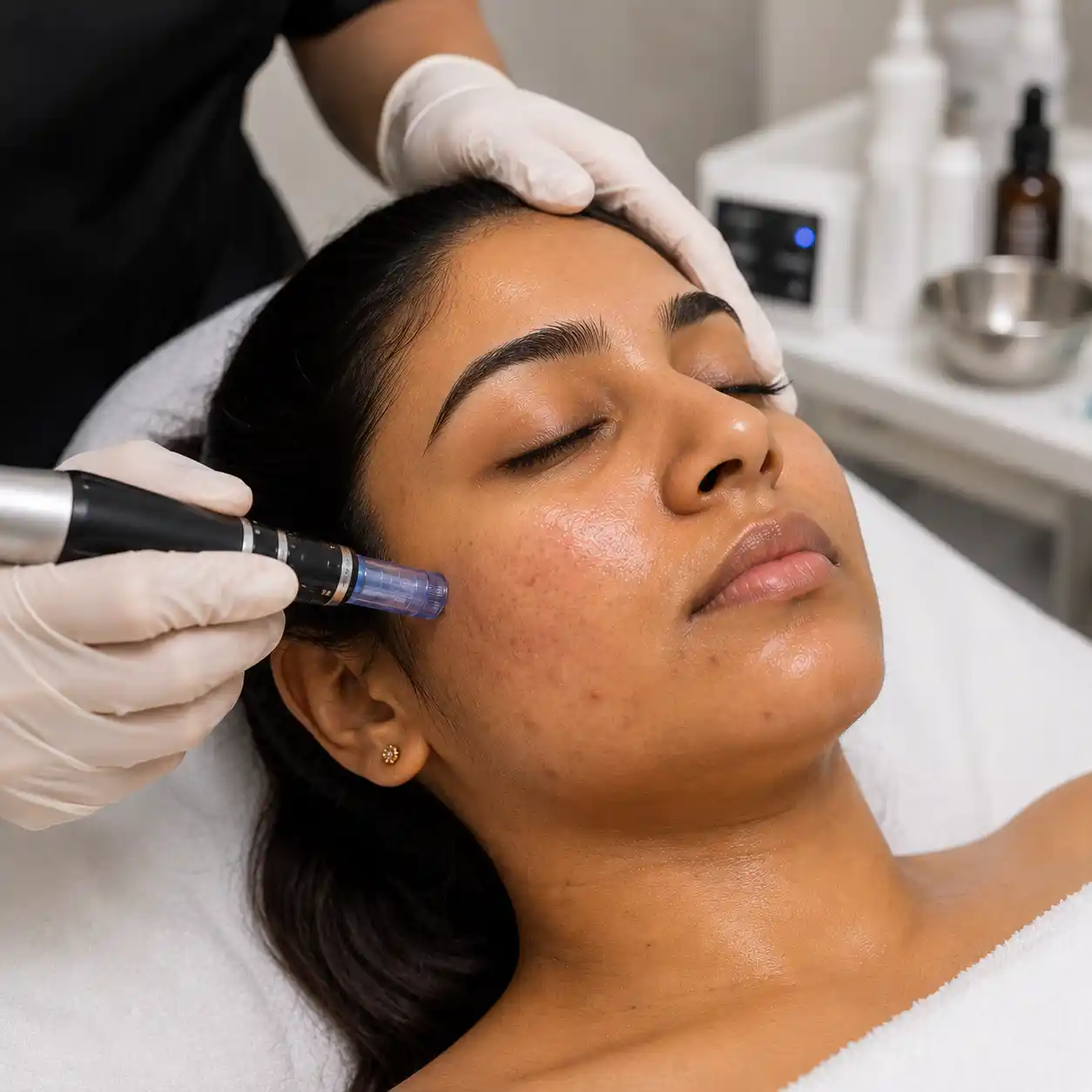
Microneedling RF (MNRF)
For moderate-to-deep acne scars requiring significant structural dermal remodelling — beyond what surface peels can achieve — Microneedling Radiofrequency delivers deep collagen stimulation and scar remodelling that complements peel treatment, producing superior scar resurfacing outcomes when used in a combined protocol.
Learn More →
Glutathione Treatment
Systemic glutathione IV therapy reduces overall melanin reactivity and oxidative stress — complementing and extending the pigmentation clearance achieved through the acne peel course, particularly for clients with strong systemic or hormonal post-acne pigmentation patterns that persist despite topical treatment.
Learn More →