
PCOS & Hair Health · Reviewed for clinical accuracy
PCOS and Facial Hair: Can It Be Reduced or Reversed?
Coarse, dark hairs on the chin or upper lip that keep coming back no matter how often you tweeze them are not something you are imagining. This has a medical name, hirsutism, and it is one of the most common signs of PCOS. Close to 1 in 5 young Indian women live with PCOS, and a large share of them deal with unwanted facial hair at some point. The question worth asking is not whether this happens. It is whether it can be reduced, or even reversed. This guide covers the hormone science behind it, what actually helps, and a realistic timeline for Indian skin and Indian routines.

- What is PCOS, and why does it cause facial hair?
- The hormone chain behind PCOS facial hair
- How common is this, really?
- Where PCOS facial hair usually shows up
- Can PCOS facial hair actually be reduced or reversed?
- Medical care for the hormones behind it
- Hair removal treatments that help
- Lifestyle changes that support better results
- What women in Nungambakkam often ask us
- Setting realistic expectations
- When to see a specialist
- Frequently asked questions
What Is PCOS, and Why Does It Cause Facial Hair?
PCOS is a hormonal condition that changes how the ovaries work. Women with PCOS often produce more androgens than usual, hormones typically linked to male traits, though every woman makes small amounts of them naturally. PCOS just pushes the levels higher. When androgens rise, hair follicles respond differently: soft, fine hair slowly turns into thick, dark hair. That shift is what shows up as facial hair.
This has nothing to do with hygiene, and it is not something anyone brings on themselves. It is a hormonal response. That distinction matters, because it changes how treatment should work. Good care does not stop at removing hair. It also looks at what is driving the growth in the first place.
The Hormone Chain Behind PCOS Facial Hair
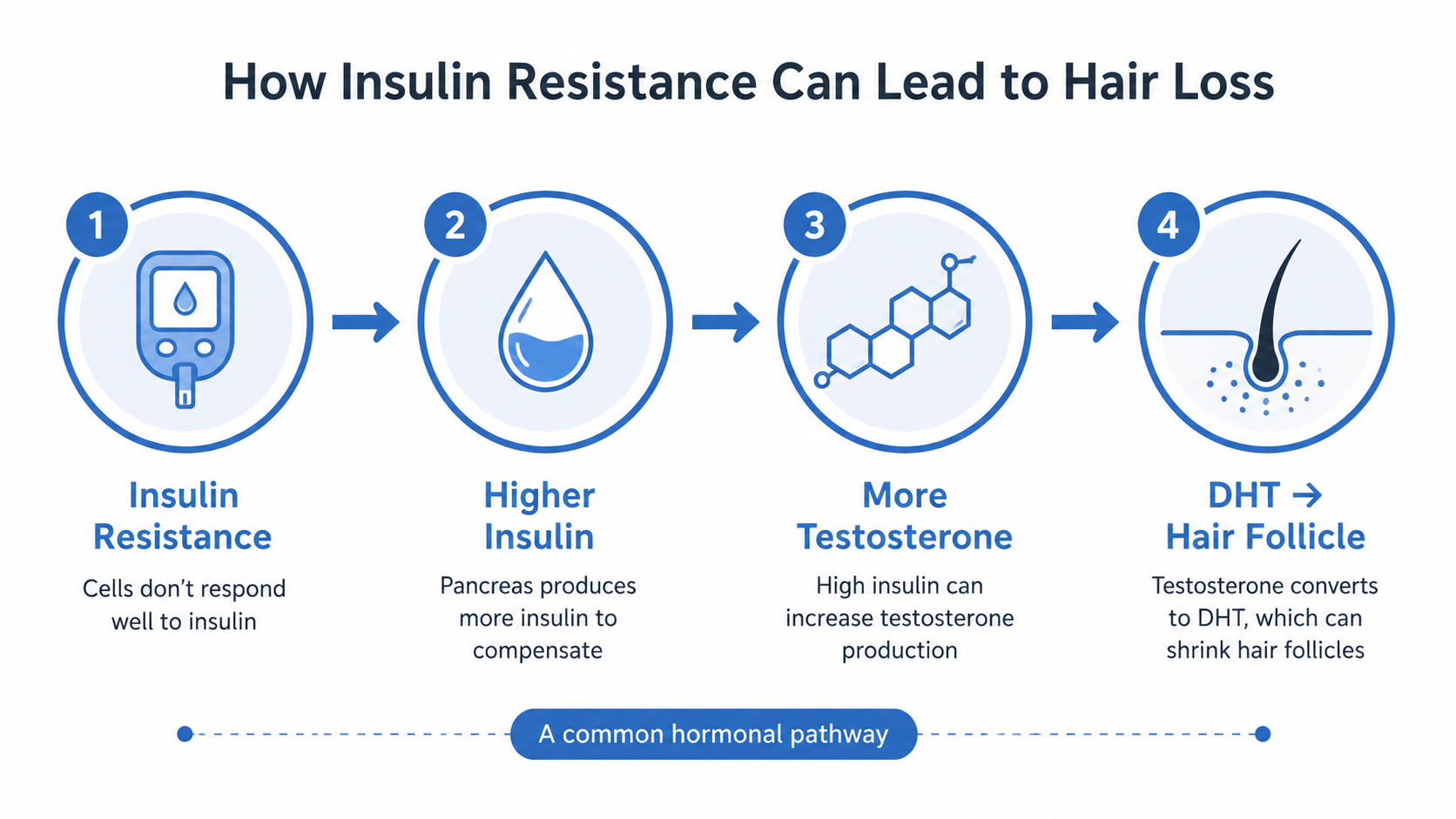
Insulin resistance plays a bigger role in this than most people expect. Many women with PCOS have some degree of it, even at a healthy weight. When insulin stays high, the ovaries produce more testosterone. At the same time, high insulin lowers a protein called SHBG, which normally keeps testosterone locked up and inactive. Once SHBG drops, more free testosterone circulates through the blood, and more of it reaches the hair follicles.
From there, an enzyme called 5-alpha reductase converts some of that testosterone into DHT, a far more potent hormone at the follicle level. Facial follicles are especially sensitive to this conversion, which is why the face is often the first place hormonal hair shows up, sometimes even before other PCOS symptoms appear.
This also explains a fairly common surprise: some women with completely normal blood testosterone levels still grow noticeable, thick facial hair. The activity is happening locally, inside the follicle, and a standard blood test does not always catch that.
How Common Is This, Really?
PCOS is the most common hormone disorder among Indian women of childbearing age. India’s national PCOS task force, run by the ICMR, has studied this closely, and estimates vary by region and by the diagnostic criteria used. Several large studies put the number somewhere between 1 in 10 and 1 in 5 young Indian women. Among women with PCOS, hirsutism is one of the most visible symptoms, often showing up alongside acne and thinning scalp hair.
If this feels deeply personal, it helps to remember that it is also a well-documented pattern affecting a large number of women around you, including many in your own city.
Where PCOS Facial Hair Usually Shows Up
Doctors assess this using a scoring system called the modified Ferriman-Gallwey scale, which checks nine areas of the body including the upper lip and chin specifically. In everyday terms, most women notice a fairly predictable pattern: the upper lip usually comes first, often as fine hair that slowly turns coarse. The chin and jawline follow, typically with darker, thicker strands. Some women also notice hair along the sideburns or neck, though this is less common than upper lip or chin growth.
Because these areas sit right in the middle of the face, even a small amount of extra hair can knock your confidence, whether that’s before a video call, a family function, or just a look in the mirror in the morning.
Can PCOS Facial Hair Actually Be Reduced or Reversed?
Here is the honest answer. PCOS facial hair can usually be reduced, often significantly, but it rarely reverses completely on its own. The hormonal tendency behind it tends to stick around, which is why ongoing management usually works better than chasing a one-time fix. That does not mean it is hopeless. Most women who combine medical guidance with steady hair removal treatment see a real, visible change over time.
Three things matter here, and they work best together: medical care for the hormones behind the hair, hair removal treatments for what is already visible, and daily habits that support how the body handles insulin. Each works differently, and combining them tends to beat relying on just one.
Medical Care for the Hormones Behind It
Since facial hair in PCOS starts with a hormone signal, treating that signal is usually the real foundation for change. A doctor, often a gynaecologist, can check hormone levels with a blood test, typically testosterone, DHEA-S, and thyroid levels, since thyroid issues can sometimes mimic or worsen similar symptoms.
Depending on the results, a doctor may suggest options that help balance hormones, along with medicine that helps the body use insulin better if resistance is present. These decisions are personal. They depend on health history, individual goals, and whether someone is trying to conceive, which is exactly why self-medicating or copying a dose off the internet is a bad idea. A proper consultation matters more than any home remedy.
Hormone treatment tends to bring slow, steady change. Most women notice slower new hair growth within a few months, though existing hair does not disappear on its own since medication mostly works on future growth rather than hair that has already formed.
Hair Removal Treatments That Help
Hormone treatment works on the cause. Hair removal treatments work on what is already there, and most specialists recommend doing both together for the best outcome.
Laser hair reduction is one of the more established options for facial hirsutism, and it needs to be handled with particular care on Indian skin. Since Indian skin tends to run medium to deep in tone, treatment works better with settings built for darker skin, such as diode or Nd:YAG lasers, along with a patch test before the first full session. Generic settings built for lighter skin can raise the risk of dark spots here, especially in less experienced hands.
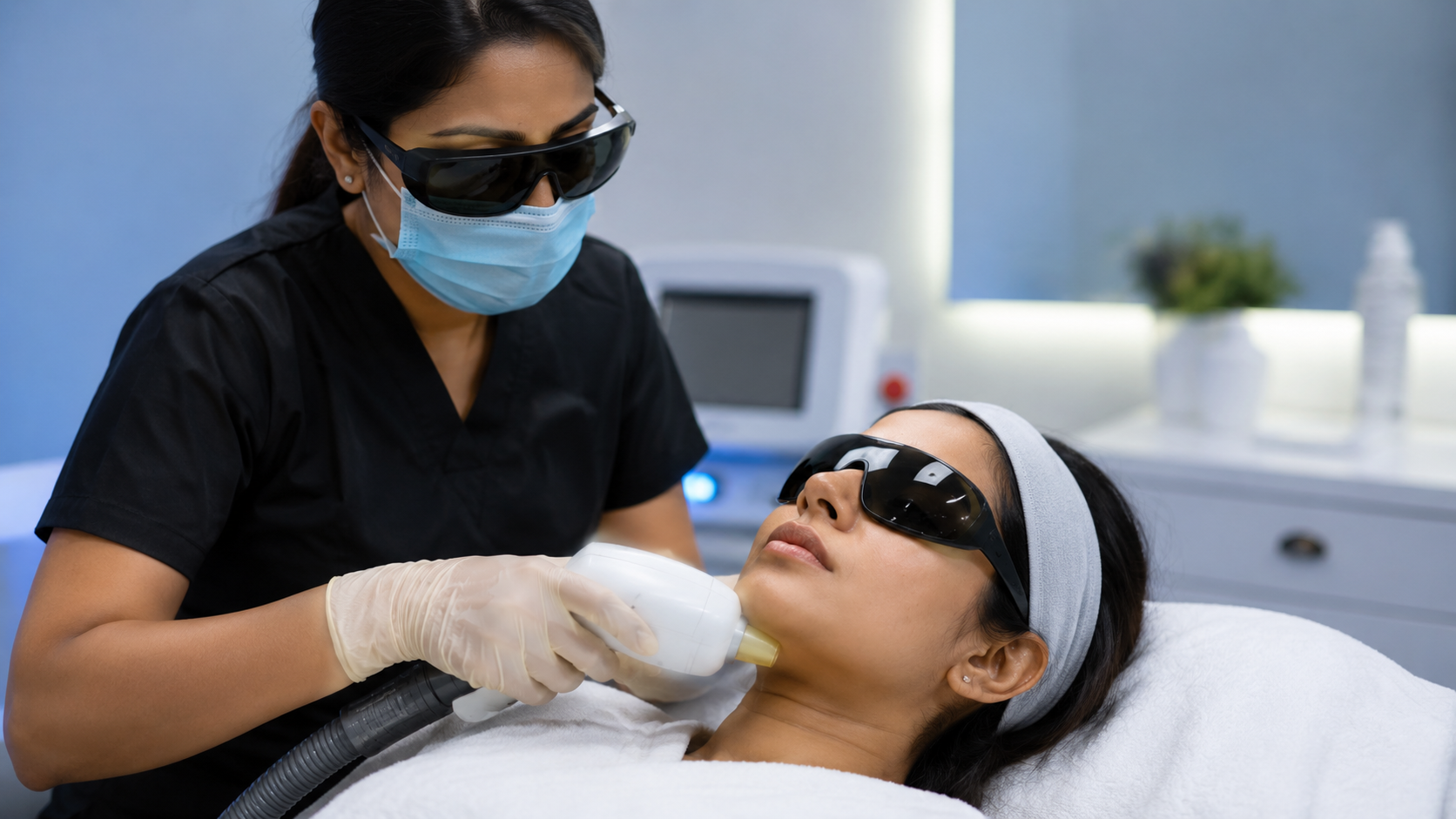
Women with PCOS usually need more sessions than someone removing hair for looks alone, since active hormones can keep waking up new follicles over time. Most clinics plan a longer initial course with periodic maintenance sessions built in, rather than promising one round as a complete fix.
Electrolysis is another option, treating one follicle at a time with a fine probe. It suits smaller areas well, like a few stray chin hairs, but works less efficiently across a larger area like the full upper lip simply because it takes more time per hair.
Everyday methods still have their place too. Threading, waxing, and hair removal creams offer quick, short-term upkeep between sessions. For fine, peach fuzz style hair, some women also ask us about dermaplaning for a smoother look between appointments. None of these change the hair growth cycle itself, but they help you get through the weeks in between.
Lifestyle Changes That Support Better Results
Insulin resistance sits at the centre of the hormone chain for a lot of women with PCOS, so habits that improve how the body handles insulin can genuinely help. They rarely work as a standalone fix though. Think of them as support alongside medical care, not a replacement for it.
A lower glycaemic index diet built around whole grains, vegetables, and enough protein, with less refined carbs and added sugar, is linked to better insulin sensitivity in PCOS research. Exercise matters here too. Regular movement, a mix of cardio and strength work, is one of the more reliable ways to improve insulin response, and many women managing PCOS related weight gain find a steady, sustainable routine beats a short intense burst.
Sleep and stress play a quieter role but a real one. Poor sleep and chronic stress raise cortisol, and high cortisol can throw hormonal balance further off track. None of this replaces medical care or hair removal treatment, but it tends to make both work better over time.

What Women in Nungambakkam Often Ask Us
Working in central Chennai brings its own set of everyday questions, and the concerns we hear from women visiting us at Maynee Skin, Hair & Slimming Clinic in Nungambakkam follow a familiar pattern. Many arrive after months of threading near Khader Nawaz Khan Road, or waxing at home, only for the hair to return within a couple of weeks anyway, often faster and coarser than before. Given how many people juggle long office hours around Nungambakkam High Road and Greams Road, the question we hear most is a practical one: how do you fit a treatment schedule into a packed calendar without repeated visits eating into work time?
Chennai’s heat and humidity come up a lot too. Is it safe to step back into traffic and sun right after a laser session? Facial skin here also deals with more dust and pollution from the constant traffic on the main roads, so aftercare, including sun protection and gentle skincare between sessions, matters just as much as the treatment itself. These are ordinary, practical questions, and a good consultation should walk you through all of them before you commit to anything.

Setting Realistic Expectations
It helps to know what a realistic timeline actually looks like, since PCOS facial hair rarely responds overnight. Hair follicles move through a slow growth cycle, so most hormonal and procedural approaches need three to six months before a real difference shows up, and full results often take longer to settle in.
PCOS is a chronic hormonal pattern rather than a short-term issue, so some ongoing maintenance is usually part of the picture even after visible improvement. That does not mean treatment has failed. Facial hair in PCOS behaves more like something you manage long-term than a problem that ends cleanly on a fixed date, and that mindset tends to feel a lot less discouraging than expecting one permanent fix.
When to See a Specialist
Some signs are worth booking a proper consultation over rather than managing alone: facial hair that appeared or worsened suddenly over a few months, irregular or missed periods, unexplained weight gain, persistent jawline acne, or thinning scalp hair alongside thicker facial hair. Together, these often point to a hormonal pattern worth investigating properly rather than treating as a cosmetic issue on its own.
A doctor can also rule out other, less common causes of excess hair growth, since not every case of hirsutism traces back to PCOS. A clear diagnosis first means the treatment plan actually targets the right cause instead of guessing.
If you are exploring options in Chennai, our team at Maynee Skin, Hair & Slimming Clinic in Nungambakkam looks at your hormone history and hair pattern together before suggesting a plan that fits your situation, whether that leans toward laser hair removal, lifestyle support, or a referral for hormone testing. You can browse our hair care treatments or reach us through our contact page whenever you are ready.
If PCOS related facial hair has been on your mind, a simple consultation at our Nungambakkam clinic can help you understand what’s driving it and which approach fits your routine best. No pressure, just a clear plan.
Talk to our teamFrequently Asked Questions
Can PCOS facial hair go away completely on its own?
Rarely. The hormonal pattern behind PCOS tends to stick around, so facial hair usually needs ongoing management rather than vanishing by itself. That said, many women see a big, visible reduction with the right combination of treatment.
How long does it take to see results from PCOS facial hair treatment?
Most women notice early changes within three to six months, whether through hormonal treatment, laser sessions, or lifestyle changes. Hair follicles work on a slow cycle, so full results usually take longer to settle.
Is laser hair removal safe for PCOS-related facial hair on Indian skin?
Yes, when it is done with equipment and settings built for darker skin tones, plus a patch test first. Since PCOS-related hair growth can be more persistent, most women need more sessions than someone without a hormonal cause.
Does losing weight cure PCOS facial hair?
Weight loss can improve how the body uses insulin, which can support hormonal balance, but it does not remove existing facial hair or guarantee that growth stops. It works best as one part of a wider plan, not a standalone fix.
What is the difference between PCOS and PMOS?
PMOS, or polyendocrine metabolic ovarian syndrome, is simply the new name for PCOS, introduced through a global medical consensus published in May 2026. Diagnosis and treatment have not changed, only the name. Expect both terms to appear in medical records for the next few years.
Should I see a gynaecologist or a skin specialist first for facial hair?
PCOS facial hair usually starts with a hormone cause, so a doctor is usually the right first step for testing and hormone care. A hair reduction specialist then helps with the visible hair itself, ideally alongside hormonal care, not instead of it.
Does shaving make PCOS facial hair grow back thicker or darker?
No. Shaving cuts hair at the surface, so it grows back with a blunt tip that can feel coarser to the touch, but it does not change the hair’s actual thickness, colour, or growth rate. The hair only looks or feels different for a short while after shaving.
Can PCOS cause facial hair and hair loss on the scalp at the same time?
Yes. The same rise in androgens that thickens facial hair can also shrink hair follicles on the scalp, so many women with PCOS deal with both extra facial hair and thinning hair at the crown at the same time.
Is PCOS facial hair hereditary?
There is often a family link. If your mother or sister has PCOS or noticeable facial hair, your own chances of developing it are somewhat higher, though genetics is only one factor alongside insulin resistance and overall hormone balance.
Does spearmint tea really help with PCOS facial hair?
Small studies suggest spearmint tea may mildly lower free testosterone and ease hirsutism when had regularly over a few months. It is a reasonable supportive habit, but the effect is gentle, so it works best alongside medical or procedural treatment, not in place of it.
Can you have PCOS facial hair with regular periods?
Yes. Some women with PCOS ovulate fairly regularly but still have raised androgen levels, which is enough to trigger facial hair. Regular periods do not rule out PCOS, so it is still worth getting hormone levels checked if hair growth increases.
This article reflects the May 2026 global consensus renaming PCOS to PMOS (published in The Lancet), ICMR PCOS Task Force prevalence research among Indian women, and established clinical understanding of androgen-driven hirsutism. It is intended for general information and does not replace a medical consultation. Reviewed for clinical accuracy by the Maynee clinical team.