Skin boosters and Botox both come up when people ask how to look fresher without surgery. But they don’t do the same job. One hydrates your skin from within. The other relaxes the muscles that cause expression lines. Here’s how each one actually works, and how to tell which one your skin needs.

What Are Skin Boosters?
Skin boosters are injections that improve skin quality, elasticity, and hydration from the inside. Unlike dermal fillers, they don’t add volume or reshape your face. Instead, they work more like an internal moisturizer.
Most skin boosters use non-crosslinked hyaluronic acid, or HA. Because the HA molecules aren’t bound into a dense gel, they spread evenly through the dermis. HA is highly hydrophilic, meaning it draws water in and holds onto it, which is what gives skin that plumped, hydrated feel after treatment.
Some advanced boosters go further. Polynucleotides, exosomes, and stabilized HA blends can also prompt fibroblasts to make new collagen and elastin. Over time, this helps with fine lines, rough patches, and the crepey texture caused by dryness and sun exposure. Results build gradually, and how long they last depends on the specific product used.
What Is Botox and How Does It Work?
Botox uses a purified protein called Botulinum Toxin Type A. It works on a different layer of skin aging: muscle movement, not skin quality.
Every time you frown, smile, or raise your eyebrows, the muscles underneath contract and fold the skin above them. Repeat that motion for years, and the fold turns into a line that stays even when your face is relaxed.
When Botox is injected into the right muscle, it blocks the nerve signal that triggers the contraction. So the muscle relaxes, and the skin above it can smooth out.
In clinical studies, patients usually notice smoother skin within 3 to 7 days, with the full effect visible by around day 14. That said, Botox doesn’t hydrate the skin or fix dullness or texture. For that, you need a different treatment.
Skin Boosters vs Botox: A Side-by-Side Look
| Feature | Skin Boosters | Botox |
|---|---|---|
| Primary goal | Hydration and skin texture | Muscle relaxation, line smoothing |
| Active ingredient | Hyaluronic acid, polynucleotides, or exosomes | Purified Botulinum Toxin Type A |
| Target layer | Deep dermis (skin tissue) | Intramuscular (facial muscles) |
| Best for | Dullness, crepey skin, dry patches, static lines | Crow’s feet, forehead lines, frown lines |
| Timeline for results | Builds gradually, usually over several weeks | Visible in 3 to 7 days, peaks around day 14 |
| Average longevity | Varies by product, generally a few months | 3 to 4 months |
How Your Environment Affects Your Skin
Where you live changes how your skin ages, and it also changes how these treatments perform. If you live or work along OMR and other coastal IT corridors, you’re dealing with a few specific stressors.

Hard water is one of them. Many apartments and tech parks along the coast run on high-TDS groundwater or tanker water. Washing your face with it daily strips the skin’s natural lipid barrier. The result is a dry, brittle outer layer that cracks easily.
Air conditioning is another factor. Spend 9 to 10 hours a day in a centrally air-conditioned office, and the air pulls moisture out of your skin the whole time. That’s often why cheeks and under-eyes develop fine lines that no amount of water-drinking seems to fix.
Then there’s the commute. Long hours in traffic expose your skin to particulate matter and UV rays. Both break down collagen faster and leave skin looking dull and tired.
So how do you tell which treatment you need? Look at when the lines show up. If they appear only when you smile or squint in bright sun, Botox is the better starting point. If your skin feels tight, looks thin, or shows fine dry crinkles even at rest, a skin booster is more likely to help. It rebuilds the moisture barrier that hard water and AC have worn down.
Can You Combine Both?
Yes, and in practice, many people do. Skin boosters and Botox work at different depths, so they don’t interfere with each other.
Botox can calm the upper face, smoothing the forehead and brow area. Meanwhile, a skin booster can target the mid and lower face, or the area under the eyes, to restore hydration and thickness.
Together, they address both problems at once: muscle movement and skin quality. The result usually looks balanced and natural, without freezing your expression.
What Happens During and After Treatment
Both treatments are quick, in-office procedures. Your provider applies a numbing cream first, so you’re comfortable throughout.
For Botox, an ultra-fine needle is used to place a few targeted injections into specific muscles. For skin boosters, the injections spread across a wider grid just under the skin’s surface.
Afterward, you might notice mild swelling, small injection marks, or slight bruising. These usually fade within 24 to 48 hours. During that window, avoid intense heat, hard workouts, or rubbing the treated area, so the product has time to settle.
How to Decide
The best way to choose is a proper skin assessment, not a trending video online.
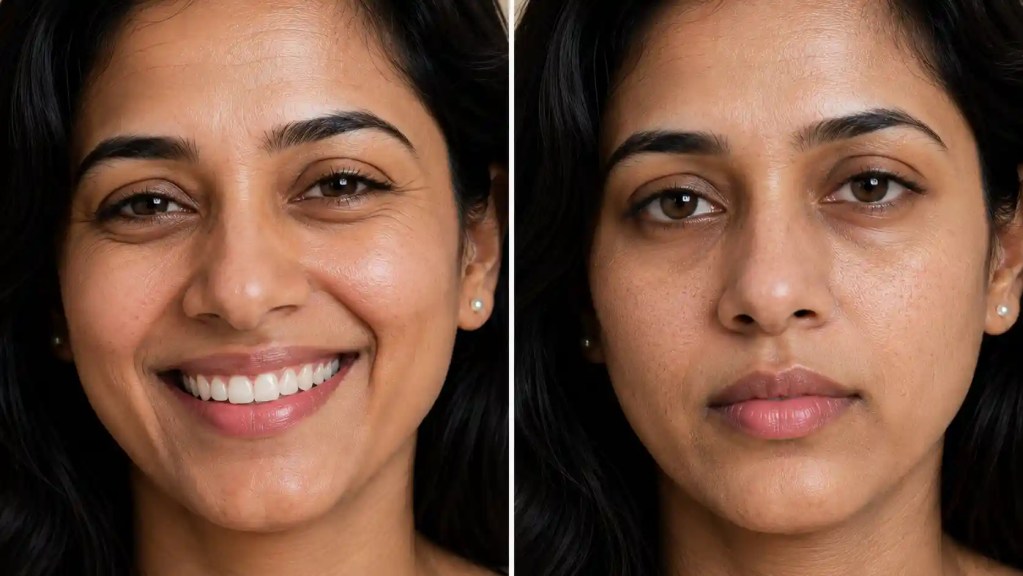
If you want to soften expression lines and stop new ones from forming, Botox is usually the right first step. If you’re dealing with dehydration from hard water, AC, or pollution, a skin booster will do more for your skin’s texture and bounce.
Either way, a clinical evaluation makes the decision easier. A trained provider can check your skin’s hydration and your muscle activity, then build a plan that fits both.
Frequently Asked Questions
Neither is better on its own. They solve different problems. Skin boosters improve hydration and texture, while Botox targets muscle-driven lines. The right choice depends on what your skin actually needs, not on which treatment is trending.
In many cases, yes. Since they work in different layers of the skin, most providers can do both in a single visit. Ask your provider whether combining them in one session makes sense for your goals, or if spacing them out works better.
Skin boosters tend to last longer for most people, though it depends on the specific product used. Botox generally lasts around 3 to 4 months. See the comparison table above for a fuller side-by-side breakdown.
Both use a numbing cream first, so discomfort is usually mild either way. Botox involves fewer injection points with a very fine needle. Skin boosters spread across a wider grid, so you may notice more pinpricks, though each one is quick.
Most people need more than one session to see the full effect, since skin boosters work gradually rather than all at once. Your provider can map out a schedule based on how dehydrated or dull your skin is to begin with.
Mild swelling, small injection marks, or slight bruising are the most common side effects for both treatments. These usually fade within 24 to 48 hours, the same recovery window covered earlier in this guide.
tart with whichever concern bothers you most. If expression lines are the main issue, Botox is usually the first step. If your skin feels dehydrated, dull, or tight, a skin booster addresses that more directly.